News
The Industrial Filterworld: Step 1 – Escaping the Algorithm of Engineering Groupthink
January 12, 2026

1. Introduction: The Invisible Architecture of Extraction
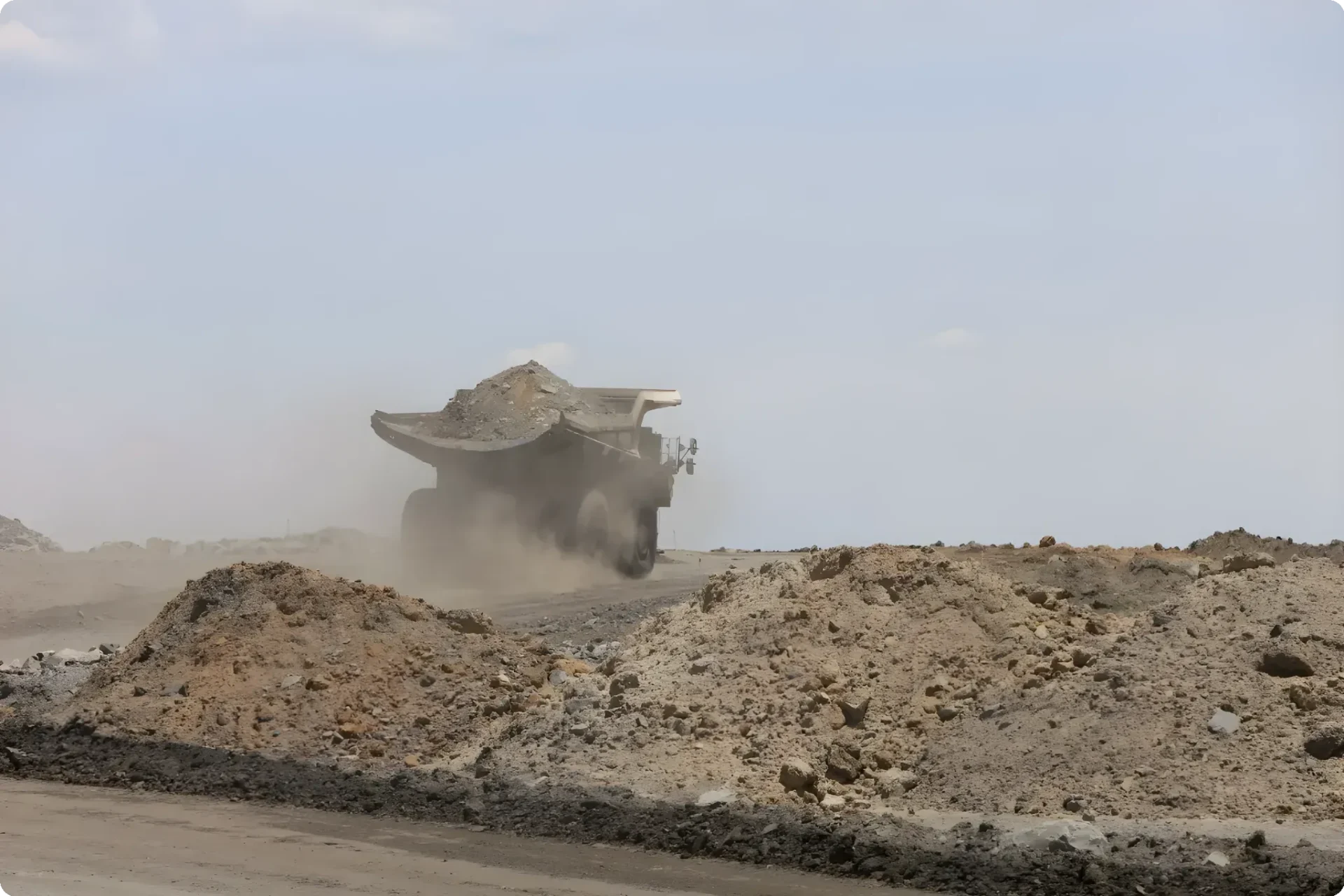
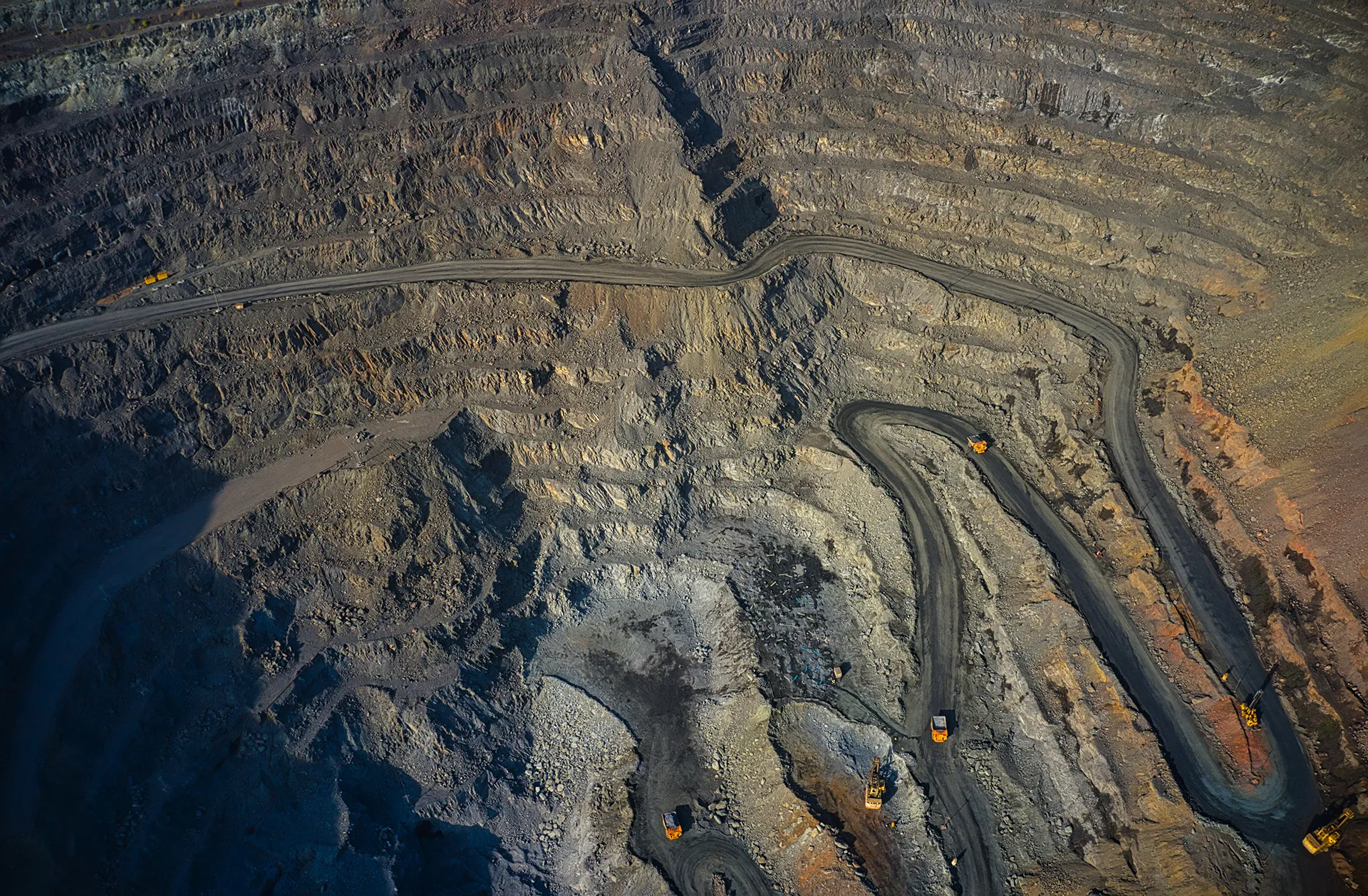
In the vast amphitheatres of modern mining, physical dominance is an illusion. While 400-tonne haul trucks navigate geometric roads, a secondary, invisible architecture exerts a stronger gravitational pull: the algorithm.
Cultural critic Kyle Chayka, in his seminal work Filterworld: How Algorithms Flattened Culture, argues that algorithmic curation homogenises our world, removing “friction” to create a state of seamless, generic sameness.1 While Chayka focuses on why coffee shops in London and Melbourne look identical, the same mechanism is rampant in mining engineering.

Procurement matrices and risk-averse ERP systems act as the “algorithm” of the resources sector. They flatten engineering diversity, pushing site managers towards the “frictionless” choice: the standard rigid steel body.
This post explores how Duratray International’s Suspended Dump Body (SDB) disrupts this Industrial Filterworld, challenging the engineering groupthink sustained by big-budget OEM advertising.
2. The Filterworld Hypothesis: Deconstructing the Algorithmic Flatness
2.1 Defining the Filterworld in an Industrial Context
Chayka defines Filterworld as a state where “shareability supersedes innovation”.2 In mining, “procure-ability supersedes suitability.” Procurement algorithms bias large suppliers and standardised SKUs to optimise supply chain logistics, not mine physics.3
The “frictionless” choice is the OEM standard – the steel box bolted to the chassis at the factory. It fits the database fields of SAP and Oracle. Conversely, the Suspended Dump Body (SDB), with its flexible rubber floor and suspension ropes, is an outlier. It introduces “friction” into the procurement process because it requires a deviation from the default spec.
Consequently, the industry suffers from “algorithmic flattening,” where unique geological challenges are met with generic steel solutions.
2.2 The Echo Chamber of Big Budget Advertising
This flattening is reinforced by an industrial echo chamber. Major OEMs (Caterpillar, Komatsu and others) wield marketing budgets in the billions, creating a “reality distortion field”.4 Through pervasive advertising, they sell the narrative that reliability equals standardisation.
This creates a cognitive bias for engineers.
When the “algorithm” of trade shows and journals constantly feeds you the image of a rigid steel tray, the SDB appears risky. In reality, the SDB is the physics-based solution, while the steel tray is merely the marketing-based default.6
3. The Architecture of Groupthink: Why Engineers Choose Inferior Tools
3.1 The Psychology of Consensus in Engineering Design
Groupthink occurs when the desire for consensus overrides rational decision-making.7 In haulage, this manifests as “design by consensus.” Maintenance prefers steel because welding is familiar; Finance prefers it because CapEx is lower (ignoring OpEx).
Deviating to a Duratray SDB disrupts this harmony. It forces teams to adopt new maintenance protocols (rope tensioning) and new ROI models (fuel savings). To avoid this cognitive load, engineering teams default to the status quo, perpetuating inefficiency.
3.2 The Role of “Fast Follower” Mentality
Mining prides itself on being a “fast follower” industry – a polite term for institutional cowardice.8 This codified groupthink discourages being the first to adopt “non-standard” technology. The result? Legacy steel bodies survive decades past their obsolescence because no one wants to be the “first” to abandon the OEM ecosystem, even if the physics of suspension are superior.
4. The Physics of the Standard: Why the Rigid Steel Body is an Algorithmic Artifact
4.1 The Dumb Box Paradigm
The rigid steel body (RSB) relies on mass and stiffness to resist impact. When rock strikes steel, shockwaves transmit instantly to the chassis, causing operator fatigue.9 To combat this, engineers add more steel (liners), increasing tare weight and burning fuel to haul dead iron.
4.2 The Carryback Penalty
The RSB’s fatal flaw is carryback. Sticky ores bond to rigid steel, reducing payload by 10-20%.10 The “algorithm” of standard procurement ignores this operational cost, focusing only on the purchase price.
5. Disrupting the Pattern: The First-Principles Engineering of the Suspended Dump Body
5.1 First Principles vs. Analogy
To escape the Industrial Filterworld, we must embrace First Principles thinking. Duratray asks: “How do we best contain mass?” The answer is suspension, not resistance.
5.2 The SDB Architecture: A System, Not a Box
The SDB is a suspension system for ore.10
- Steel Frame: Lightweight skeleton.
- Suspension Ropes: Synthetic elastomer “springs.”
- Rubber Mat: The wear interface.
5.3 The Physics of Suspension
The Trampoline Effect changes the impact equation. The rubber mat deforms, increasing impact duration (Delta) and reducing peak force. This cuts vibration by ~50% compared to steel.9
5.4 The Thixotropic Advantage: Elimination of Carryback
The SDB’s flexible floor makes static bonding impossible. As the truck tips, the mat “snaps,” actively shedding material. A Transport Canada study confirmed the SDB’s ability to mitigate carryback where steel fails.11
6. Operational Analytics: Data-Driven Proof of Deviation
6.1 Payload: The Economic Driver
Escaping the algorithm pays dividends. SDBs reduce tare weight by 10-20%, directly boosting payload.12
- Case Study: At Anglo American’s New Vaal Colliery, SDBs increased average payload from 44.65t (steel) to 58.39t—a 30.7% increase.12
6.2 Fuel Efficiency: The Green Dividend
Eliminating the parasite of carryback and reducing tare weight lowers fuel consumption. Operations report diesel savings of 15-18%, a critical metric for decarbonisation targets.9
7. The Human Element: Engineering for the Operator in the Loop
7.1 Escaping the “Servo” Mindset
The “standard” view treats operators as servos.
The SDB prioritises the human sensor.
7.2 NVH (Noise, Vibration & Harshness) Attenuation
The rubber mat dampens noise by >5 dB and significantly lowers Whole Body Vibration (WBV), reducing operator fatigue and injury risk.10
8. Case Studies in Innovation: Global Reports from the Edge
8.1 The Frozen North: BHP Ekati (Canada)
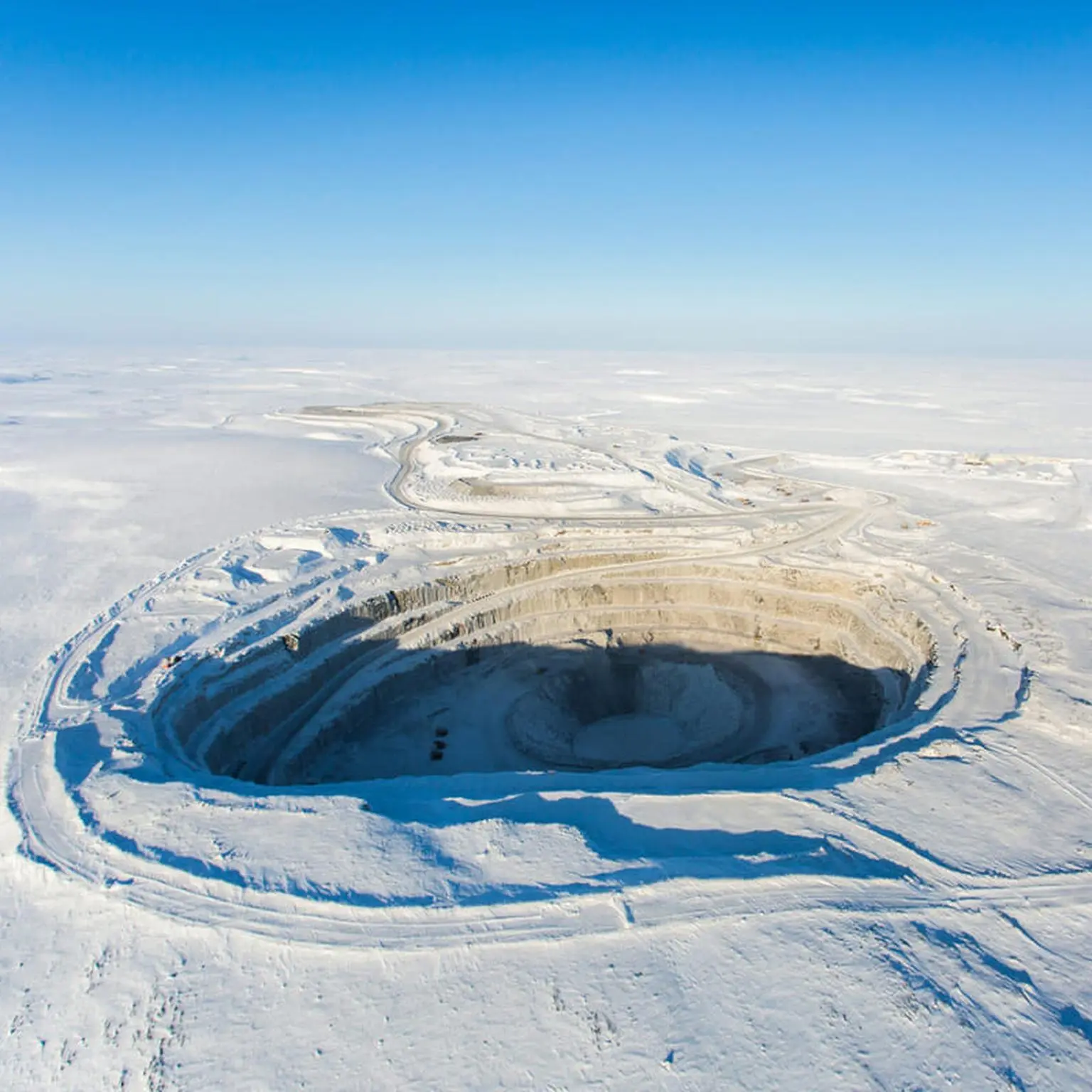
While the “standard” algorithm suggested heated steel bodies, BHP deployed SDBs. The flexibility shed frozen kimberlite, increasing payload by 8% and eliminating carryback.13
8.2 The Abrasive Pit: Rio Tinto Argyle (Australia)
Facing extreme abrasion, Argyle rejected the “thicker steel” solution. They chose Duratray’s impact mats, proving that resilience beats hardness.14
8.3 The Urban Mine: Moolarben Coal (Australia)
To meet strict community noise limits, Moolarben utilised a “Stealth Fleet” of SDBs, reducing environmental noise where steel bodies would have forced a shutdown.15
9. Big Budget Advertising vs. Niche Engineering
9.1 The safe “IBM Effect” in Mining
OEMs spend billions to maintain the status quo. They frame the “factory standard” as the safe choice. Duratray cannot outspend them. Instead, Duratray relies on Result-Based Engineering.16
While Goliath (OEMs) wins on volume and algorithmic conformity, David (Duratray) wins on precision and deviation.
10. Conclusion: Re-engineering the Culture of Mining
The Industrial Filterworld is a comfortable cage. It offers the safety of the standard and the approval of the algorithm. But it costs millions in lost payload and fuel.
The Duratray SDB is a manifesto for engineering courage.
It requires engineers to push past the friction of procurement and challenge the echo chamber of big advertising. If you see rigid steel trays carrying sticky mud, you are witnessing the physical manifestation of groupthink.
Don’t just buy the truck. Engineer the haul.
11. Extended Technical Analysis: Simulation and Digital Twins
11.1 The Role of DEM in Breaking the Mould
Duratray combats “flatness” with Discrete Element Method (DEM) simulation. We virtually prototype every body, modelling millions of particles to validate the “Trampoline Effect” before fabrication.1
Frequently Asked Questions (FAQ)
Q1: How does the Duratray SDB eliminate carryback compared to steel trays?
A: Unlike rigid steel bodies where material bonds to the surface, the SDB features a flexible rubber floor. During the dumping cycle, the mat stretches and “snaps” back, physically ejecting sticky or frozen material. This thixotropic action prevents accumulation, as verified by Transport Canada studies.11
Q2: Can the SDB be fitted to any brand of haul truck?
A: Yes. The SDB is compatible with all major OEM truck manufacturers, including Caterpillar, Komatsu, Hitachi, Liebherr and others. It is engineered as a bespoke solution to fit the specific chassis mounting points of any truck class, from 40 to 400 tonnes.19
Q3: Does the SDB really increase payload capacity?
A: Absolutely. By utilizing high-strength steel frames and lighter rubber/synthetic materials, the SDB typically weighs 10-20% less than a standard steel body. This tare weight reduction allows for a direct 1:1 increase in ore payload without exceeding the truck’s Gross Vehicle Weight (GVW).12
Q4: How does the SDB suspension system impact maintenance costs?
A: The SDB is designed for modular maintenance. Rather than requiring lengthy and risky welding downtime for cracks common in steel trays, the rubber mat and suspension ropes can be replaced individually. Additionally, the shock-absorbing nature of the body reduces stress on the truck’s chassis and tyres, lowering overall fleet maintenance costs.20
Q5: What are the environmental (ESG) benefits of using SDBs?
A: The SDB contributes to decarbonisation in two ways: firstly, by reducing the fuel burned to haul dead steel weight; and secondly, by eliminating the fuel wasted hauling carryback (mud) back and forth. Operations have recorded fuel savings of up to 15-18%, directly reducing the carbon intensity per tonne moved.9
Citations
- Filterworld Summary of Key Ideas and Review | Kyle Chayka – Blinkist, accessed on December 10, 2025, https://www.blinkist.com/en/books/filterworld-en
- Filterworld: How Algorithms Flattened Culture | Politics and Prose Bookstore, accessed on December 10, 2025, https://politics-prose.com/book/9780385548281
- Reimagining Procurement: Differentiated vs Standardized Services – MIT CTL, accessed on December 10, 2025, https://ctl.mit.edu/sites/ctl.mit.edu/files/theses/Reimagining%20Procurement%20Differentiated%20vs%20Standardized%20Services.pdf
- 2023 Annual Report to Shareholders on Form 10-K – Caterpillar, accessed on December 10, 2025, https://www.caterpillar.com/en/investors/financial-information/proxy-materials/annual-report-to-shareholders.html
- Book Review: Filterworld by Kyle Chayka – Eustea Reads, accessed on December 10, 2025, https://eustaciatan.com/2024/04/book-review-filterworld-by-kyle-chayka.html
- B2B Marketing Budget Allocation: Maximize ROI in 2025 – Eliya, accessed on December 10, 2025, https://www.eliya.io/blog/marketing-spend-optimization/b2b-marketing-budget-allocation
- Groupthink Decision Making Deficiency in the Requirements Engineering Process: Towards a Crowdsourcing Model | Request PDF – ResearchGate, accessed on December 10, 2025, https://www.researchgate.net/publication/256031624_Groupthink_Decision_Making_Deficiency_in_the_Requirements_Engineering_Process_Towards_a_Crowdsourcing_Model
- Innovation in mining – AusIMM, accessed on December 10, 2025, https://www.ausimm.com/bulletin/bulletin-articles/innovation-in-mining/
- The Tray is Everything: The Ultimate Strategic Guide to Operational Optimisation Mining, accessed on December 10, 2025, https://duratray.com/operational-optimisation-mining-suspended-dump-body/
- Suspended Dump Body – Duratray Precision Engineering, accessed on December 10, 2025, https://duratray.com/suspended-dump-body-precision-engineering/
- Duratray Featured in Canadian Government’s Study on Reducing Carryback in Cold Weather, accessed on December 10, 2025, https://duratray.com/duratray-featured-in-canadian-governments-study-on-reducing-carryback-in-cold-weather/
- The Unseen Fuel Guzzler in Your Mine & How to Stop It: A Deep Dive into Duratray’s Suspended Dump Body, accessed on December 10, 2025, https://duratray.com/duratray-suspended-dump-body-fuel-savings-payload/
- The Power of Less – Suspended Dump Body Diesel Savings up to 15% in Mining – Duratray, accessed on December 10, 2025, https://duratray.com/suspended-dump-body-diesel-savings-mining/
- Suspended Dump Bodies in Hard Rock Mining: The Definitive Guide to Proven Performance and Cost Savings – Duratray, accessed on December 10, 2025, https://duratray.com/suspended-dump-bodies-in-hard-rock-mining/
- Duratray Suspended Dump Body designed for noise reduction – YouTube, accessed on December 10, 2025, https://www.youtube.com/watch?v=va-DFJ06yJc
- Generative Design is Doomed to Fail – Daniel Davis, accessed on December 10, 2025, https://www.danieldavis.com/generative-design-doomed-to-fail/
- Built for impact: Optimize heavy equipment design with DEM simulation – Altair, accessed on December 10, 2025, https://web.altair.com/built-for-impact-optimize-heavy-equipment-design-with-dem-simulation?advanced-eng.cz=
- Duratray SDB models for CATERPILLAR 796AC mining trucks, accessed on December 10, 2025, https://duratray.com/dump-bodies-caterpillar-796ac/
- Suspended Dump Body (SDB) – Duratray, accessed on December 10, 2025, https://duratray.com/duratray-products/suspended-dump-body/
- 7 Ways Duratray’s Game-Changing Maintenance Keeps Remote Mines Operational, accessed on December 10, 2025, https://duratray.com/duratray-suspended-dump-body-maintenance/
Recent News