News
Switch from Outdated Steel Trays: Why Duratray’s Suspended Load Isolation System is the Future of Heavy Haulage
June 28, 2026
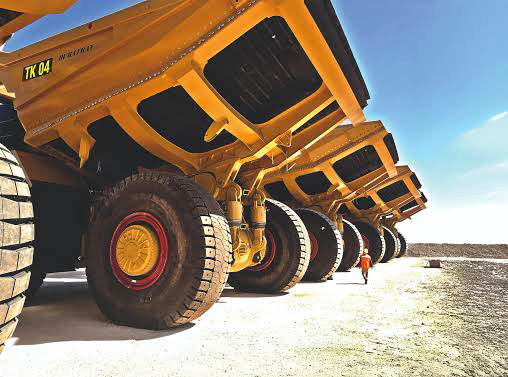
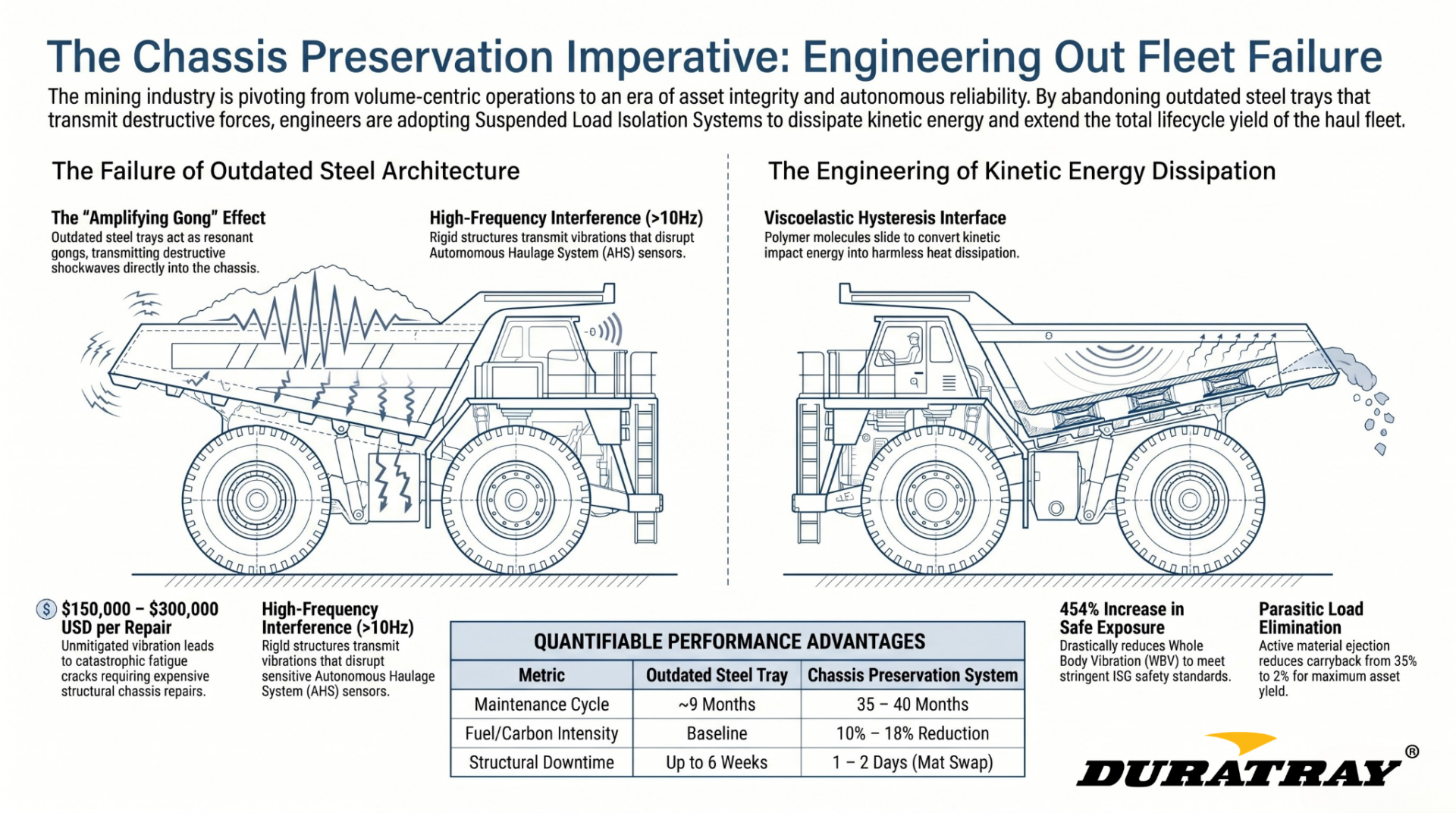
For decades, the mining sector has treated haul truck dump bodies as basic, heavy-duty steel boxes. When an outdated steel tray floor wears out or cracks under high-impact loading, the traditional response has been to weld on thicker, heavier steel wear plates. But adding more steel creates a compounding problem — it increases tare weight, limits payload capacity, and turns your truck body into a giant acoustic gong vibrating the entire chassis.
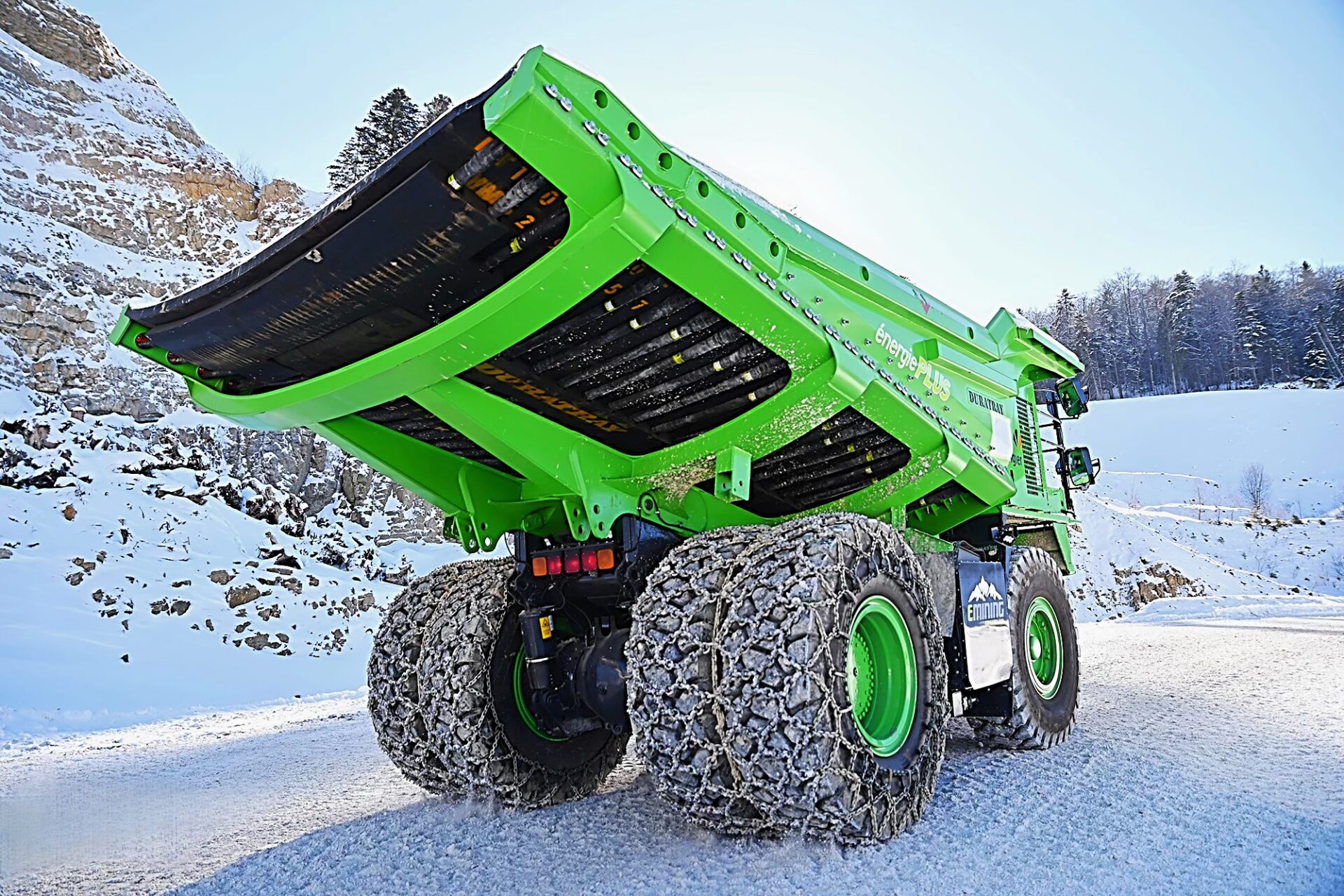
Duratray’s Suspended Load Isolation System (SILS) throws this old-school engineering out of the window. Instead of brute-force mass, SILS relies on material elasticity and field data to optimise fleet performance.
THE TECHNOLOGY
The physics of elasticity vs brute force
Standard steel trays act like rigid springs, transmitting loading shockwaves directly through the truck’s frame, tyres, and cabin. Duratray’s SILS uses a Viscoelastic Hysteresis Interface — a three-component system that absorbs and dissipates kinetic energy rather than resisting it.
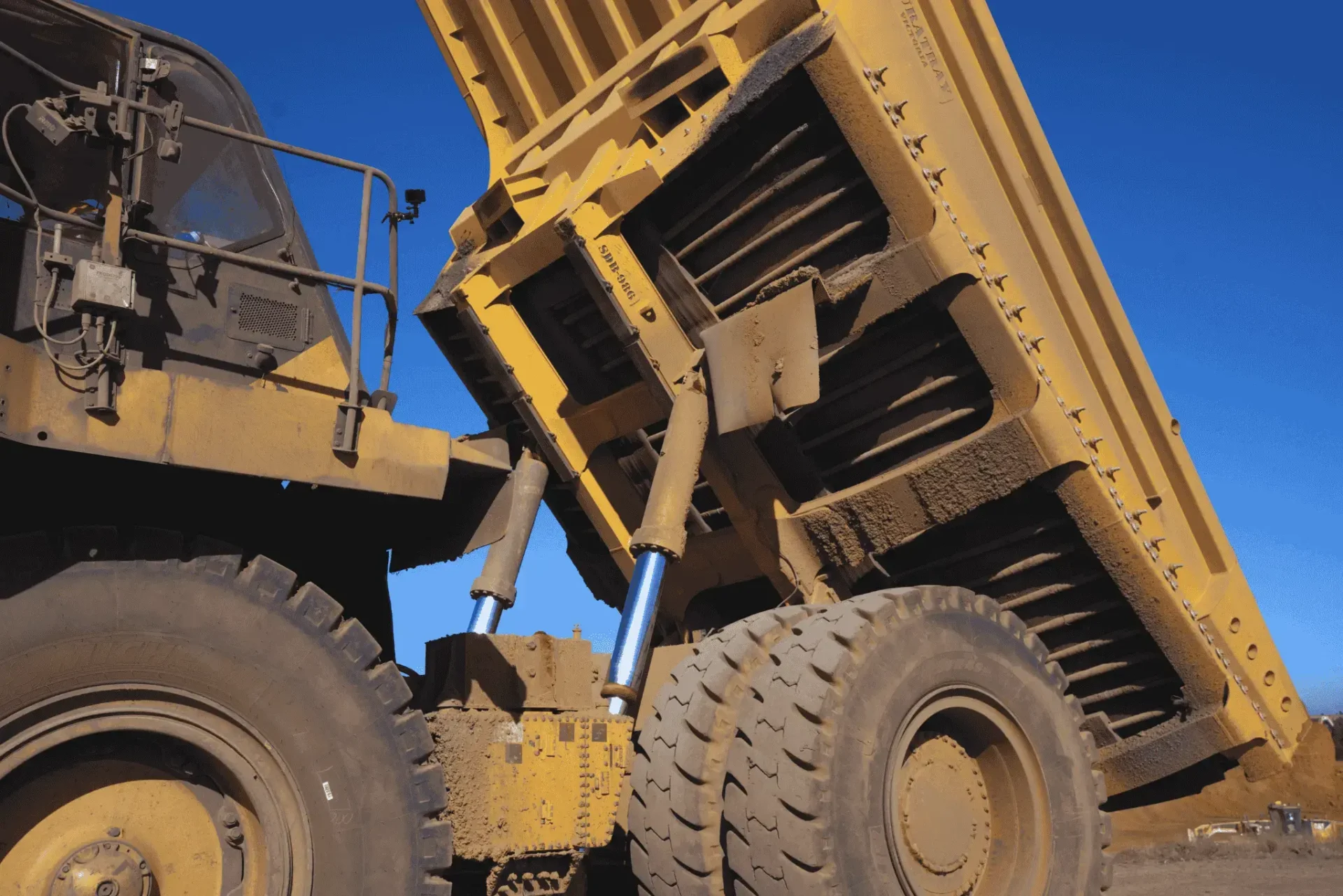
Lightweight steel space skeleton
High-strength, reduced-weight steel frame that provides structural shape without unnecessary mass.
High-performance elastomeric ropes
Synthetic, rubber-coated suspension cables anchored to the steel skeleton.
Flexible rubber wear mat
A thick, impact-resistant rubber membrane suspended directly on the elastomeric ropes.
When an excavator drops tens of tonnes of abrasive rock into the tray, the suspended mat sags, absorbing up to 50% of the kinetic energy and dissipating it as heat — dampening impact instead of transmitting a shockwave into the multi-million-dollar chassis.
THE DATA
Fact-based architecture: the raw operational numbers
Engineers run operations on data, not promises. The benefits of switching from outdated steel trays are highly quantifiable across three critical areas.
1. Eliminating the carryback tax
Sticky clay and frozen overburden cling to rigid steel corners. This leftover material — carryback — acts as a permanent payload tax, burning diesel to haul useless dead weight. During dumping, the SILS mat sags and recoils, creating “Active Material Ejection” that dislodges cohesive soils.
Field Proof
An Anglo American trial reduced sticky carryback from 35% down to under 2%. At BHP’s Ekati Diamond Mine, SILS completely eliminated frozen granite carryback at temperatures as low as −50°C.
2. Shaving tare weight to boost payload
A truck’s gross vehicle weight is a fixed engineering limit. By eliminating heavy steel plate, SILS reduces dump body tare weight by up to 40%. Every kilogram removed is a kilogram of extra payload on every cycle.
Field proof — Anglo American New Vaal Colliery
Identical trucks running side by side: traditional steel bodies averaged 44.65 tonnes; Duratray SILS averaged 58.39 tonnes — a 30% increase in productive capacity.
30%
Payload increase (New Vaal Colliery)
40%
Reduction in dump body tare weight
<2%
Carryback rate (vs 35% for steel)
15–18%
Direct fuel savings
3. Lower fuel consumption and longer service intervals
Hauling a lighter tray with zero carryback means the engine does less work. The rubber mat’s elasticity also means operations don’t stop for frequent weld repairs.
Operational data
Eliminating carryback and reducing tare weight yields fuel savings of 15–18% (roughly 23 litres of diesel per hour). SILS runs for 35–40 months between major overhauls — vs 9–12 months for standard steel dump bodies.
ENVIRONMENT & OPERATOR
Solving noise and vibration complaints
Mining operations near communities face strict environmental noise limits. Outdated steel trays function like massive amplifiers during loading. SILS naturally dampens this acoustic energy.
At Yancoal’s Moolarben Coal mine in New South Wales, Duratray co-created custom sound-attenuating bodies for the mine’s Komatsu fleet. Loading noise fell by up to 10 decibels.
Instrumented testing on a Unit 650 haul truck confirmed operator-level improvements:
~50%
Reduction in vertical impact g-forces (1.984 → 1.082 m/s²)
64%
Reduction in perceived in-cab loudness (−5.5 dB)
WHAT’S NEXT
Next-generation integration and regional innovation
Duratray’s engineering evolution has paved the way for Smart Tray 4.0, which integrates real-time telemetry to monitor payload distribution and cycle times on active haul roads.
This innovation is backed by a partnership with an Australian University on advanced R&D — including a carbon-fibre dump body program — supported by Australian research grants and state advisory bodies.
To scale this architecture, Conymet Duratray invested A$15 million to build a 10,000 m² manufacturing facility in Pakenham, Victoria. The site houses one of only two industrial autoclaves in the Southern Hemisphere, specifically designed to cure SILS rubber wear mats.
The verdict
Continuing to haul rigid, high-maintenance equipment is an expensive, old-school habit. Duratray’s SILS uses the physics of elasticity to resolve structural fatigue, reduce noise, eliminate carryback, and maximise payload. When field data shows a 30% payload boost and a 15% fuel reduction, the engineering decision becomes remarkably simple.
FAQ
Frequently asked questions
Unlike rigid steel trays that transmit impact shock directly to the truck frame, the SILS uses a flexible, rubber-based interface that absorbs kinetic energy — protecting both the chassis and the operator.
By reducing dump body tare weight by up to 40% through a lightweight steel skeleton, SILS allows for a significantly higher payload per cycle — with documented increases of up to 30%.
Carryback is material that clings to the tray after dumping, reducing usable payload. The SILS rubber mat sags and recoils during the dumping process, creating Active Material Ejection that dislodges sticky or frozen material — reducing carryback to under 2%.
No. SILS typically runs for 35–40 months between major overhauls — significantly longer than the 9–12 month lifecycle of standard steel dump bodies.
Instrumented testing has shown a 50% reduction in vertical impact g-forces and a 64% reduction in perceived in-cab loudness during loading operations.
Recent News