News
The Challenge is on. The Suspended Dump Body vs Steel: Why Your Mine is Losing Millions
December 15, 2025
Mine Manager: “Righto, I’ve got the quotes for the new dump bodies. The steel ones are $180K cheaper per unit than these SDB jobbies. Twenty trucks – that’s $3.6 million we’d save. Bloody beauty, yeah?”
Optimisation Manager: “Mate, hang on a sec. How many tonnes per year do we shift with those twenty trucks?”
Mine Manager: “About 50 million. Why’s that?”
Optimisation Manager: “Because if the Suspended Dump Body gives us even a 10% payload bump – and the data reckons it will – that’s five million extra tonnes every year. At our current margins, that’s worth more than your entire ‘saving’ in the first twelve months. And we’re planning to flog these trucks for how long?”
Mine Manager: “Ten years, minimum.”
Optimisation Manager: “Fair dinkum. So you’re comparing a one-off $3.6 million ‘saving’ against ten years of better payloads, lower fuel bills, less time in the workshop, and trucks that actually turn up for work. Have you actually crunched the Total Cost of Ownership (TCO) numbers, or are we just having a punt on the cheap option?”
Mine Manager: “…Righto, I’ll get onto Duratray about a trial. No point being a drongo about this.”
This conversation should be happening in every mine office across the globe. Because here is the uncomfortable truth: if you are running conventional steel units instead of a Suspended Dump Body (SDB), you are operating at a measurable competitive disadvantage.
This is not a marginal loss. It is substantial, documentable, and entirely avoidable.
The Hidden Costs of Traditional Steel Dump Bodies
For decades, the rigid steel dump body has been the default choice – familiar, traditional, and unquestioned. Yet, this “safe” option is quietly draining operations of productivity and profitability every single shift.
Consider what a traditional rigid steel dump body actually does to your haulage efficiency:
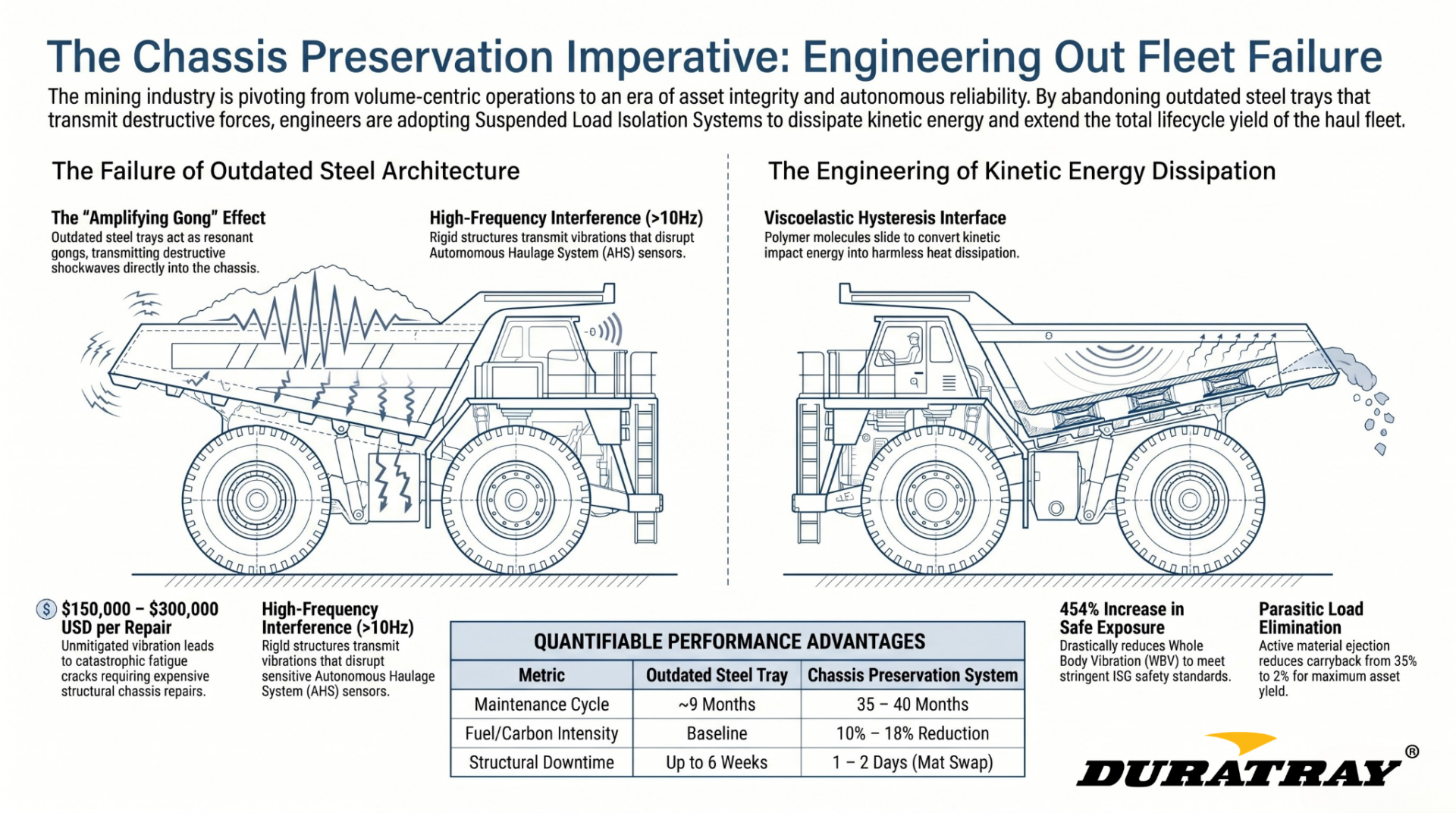
- Carryback is built into the design. Sticky material clinging to the floor and sidewalls isn’t an operational quirk; it is a fundamental design flaw of steel. In operations handling sticky clays, this can represent 2–5% of nominal payload carried uselessly back and forth. A fleet of twenty trucks carrying back just three tonnes each per cycle wastes tens of thousands of tonnes of diesel annually.
- Shock loads destroy capital assets. Each time a 200-tonne payload crashes into rigid steel, impact forces transmit directly through the chassis. Maintenance records tell the story: premature frame failures, cracked welds, and accelerated component wear.
- You pay for weight that delivers nothing. Traditional steel bodies with wear plates can weigh 15–25% more than an SDB equivalent. On a 400-tonne truck, that is potentially 30–40 tonnes of non-productive weight. Every litre of diesel consumed hauling that excess steel is a direct hit to your bottom line.
- Noise pollution limits operational flexibility. Equipment generating 10 dB more noise than necessary brings community complaints and regulatory scrutiny. This restricts operational scheduling and creates workforce safety concerns.
The SDB Difference: Engineering That Works With Physics
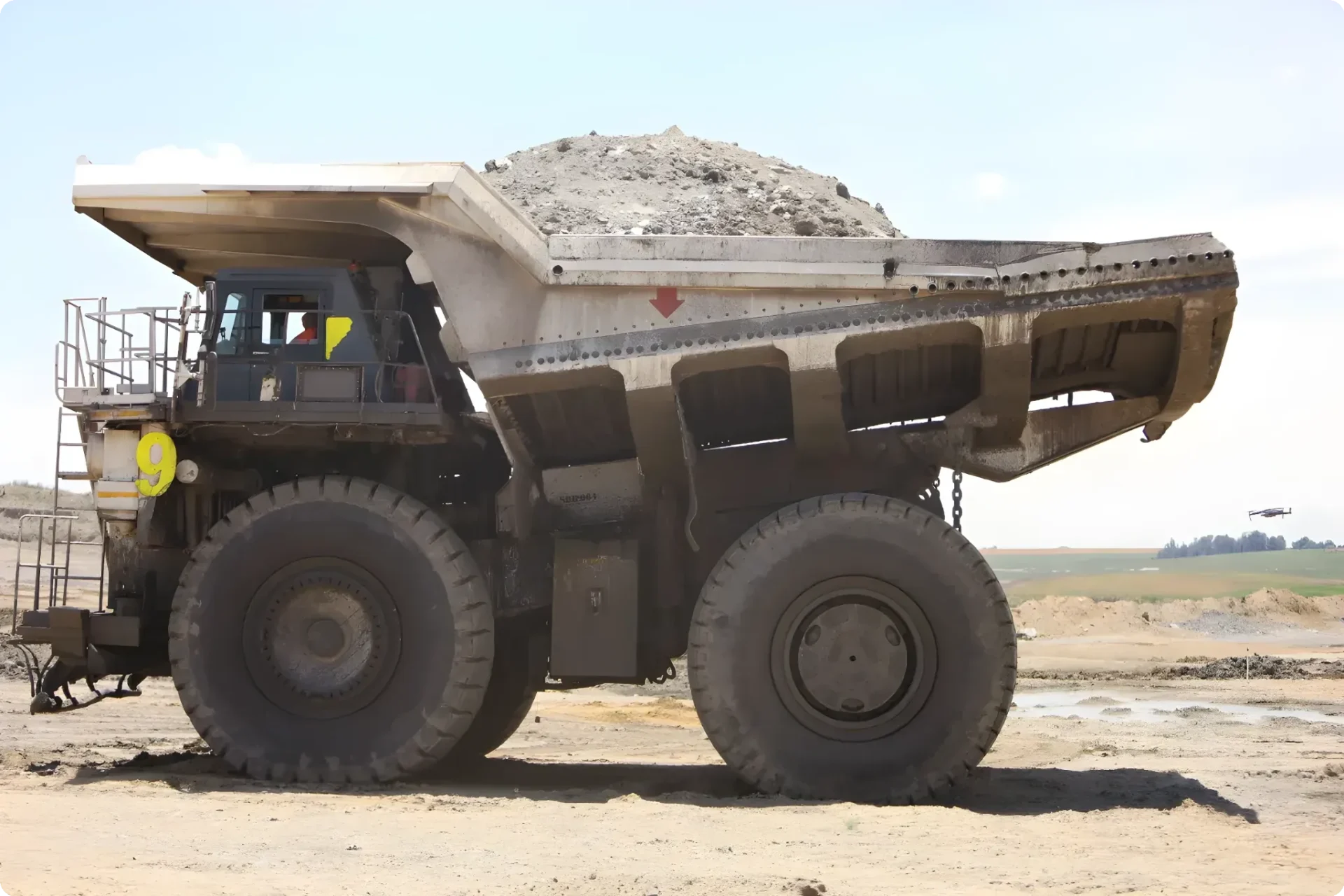
The Duratray Suspended Dump Body (SDB) is not an incremental improvement – it is a fundamental rethinking of haulage physics. Instead of brute-force resistance, it employs intelligent energy management.
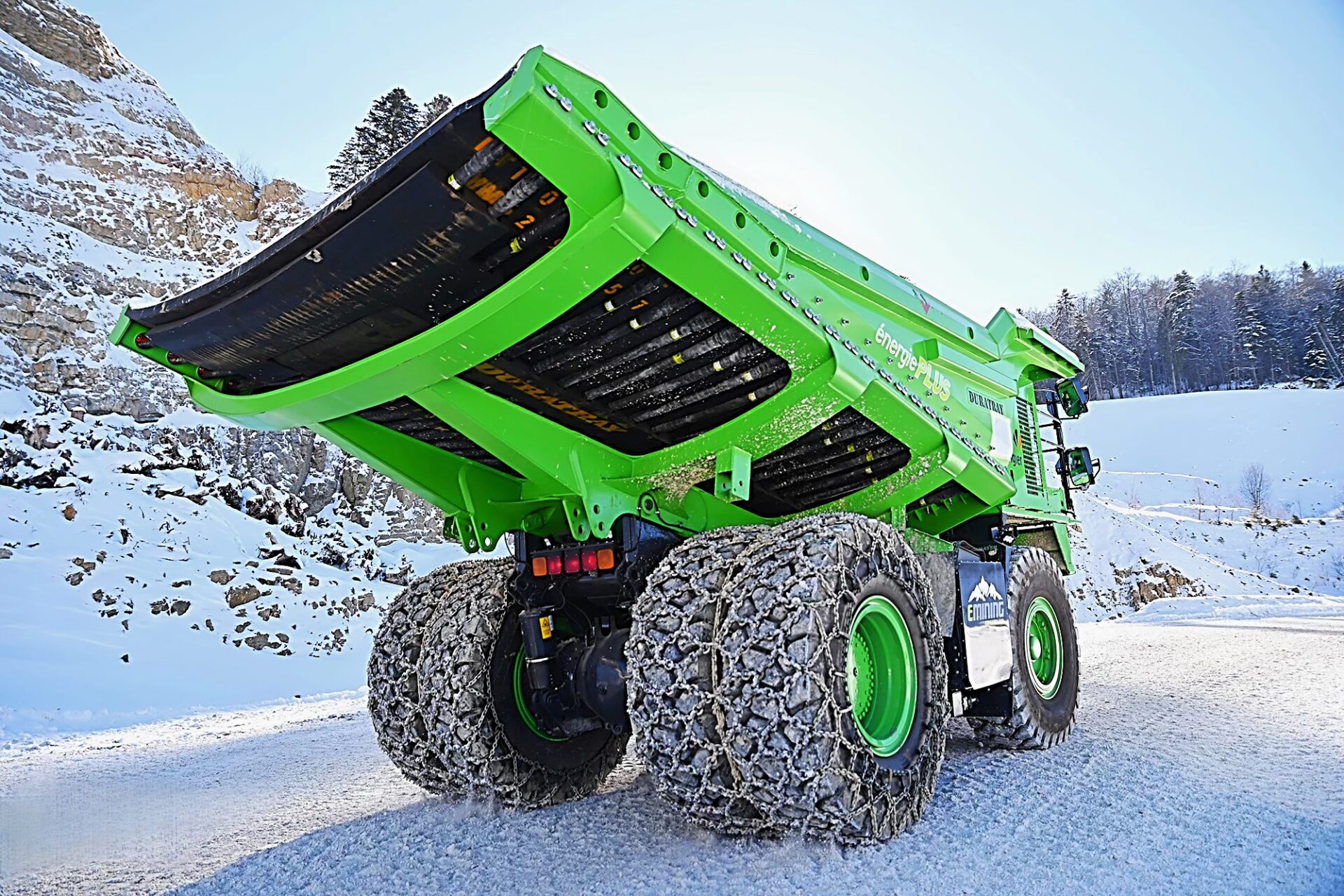
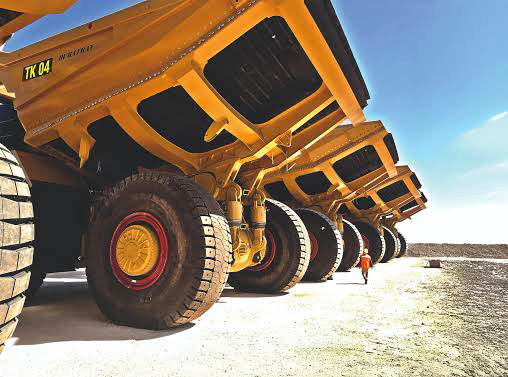
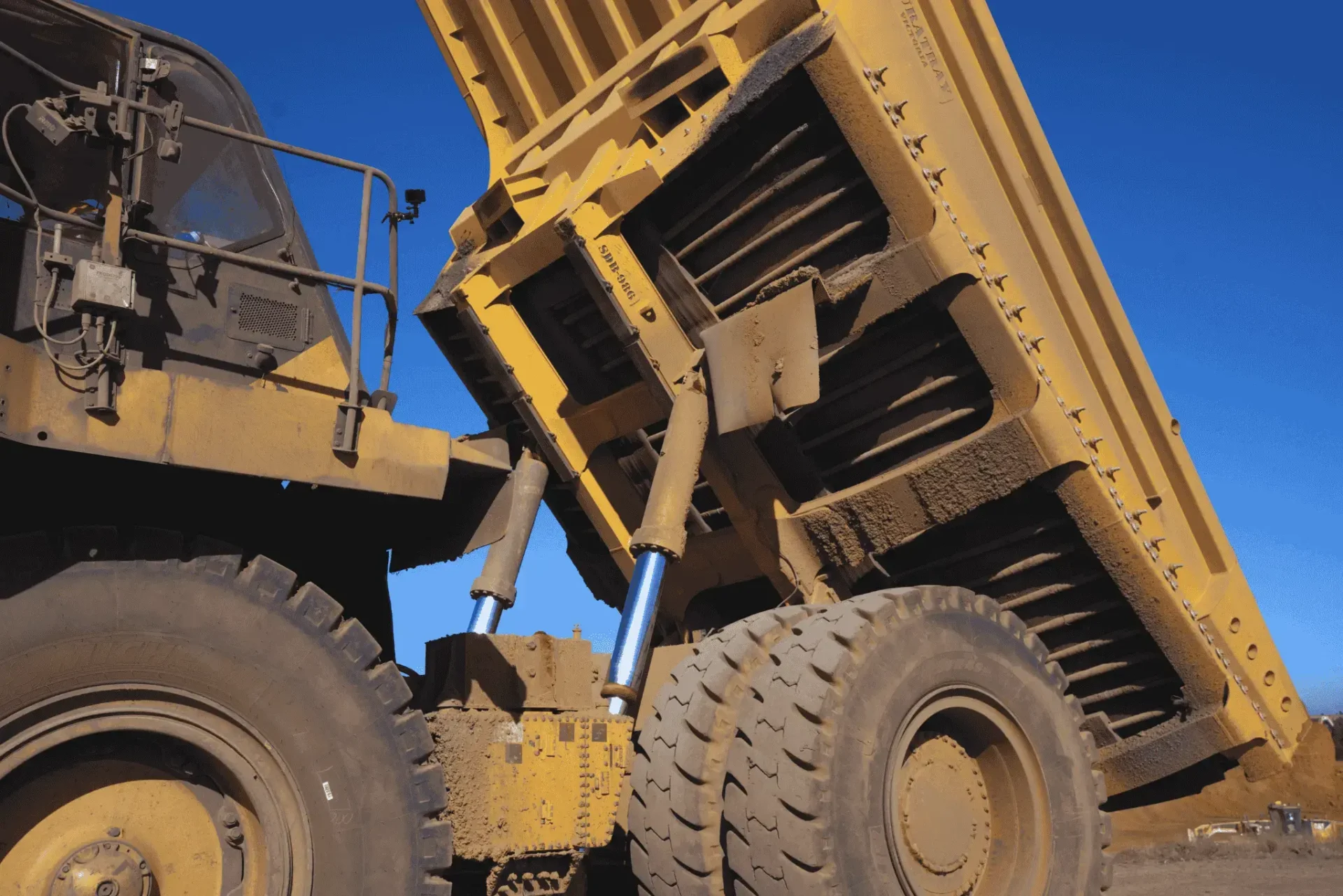
The core innovation is a flexible, high-strength rubber mat suspended by precisely calibrated synthetic ropes within an abrasion-resistant steel frame. This design transforms the dump body from a passive container into an active, performance-enhancing component.
Documented Performance Metrics
Mines operating Duratray’s technology across six continents are achieving verified results:
- Carryback is virtually eliminated. The flexible rubber floor remains in constant motion during loading and dumping, preventing material adhesion. Sticky clays and moisture-heavy ores simply slide away.
- Payload capacity increases by up to 31%. The SDB’s lighter tare weight (10–20% reduction vs steel) and higher volumetric capacity mean more ore per trip without exceeding GVW limits.
- Fuel consumption drops measurably. Between reduced tare weight and eliminated carryback, mines document diesel savings reaching 15%. For a fleet of twenty trucks, this can exceed one million litres saved annually.
- Shock absorption extends equipment life. Independent studies document G-force reductions of 40–52%. This significantly reduces wear on chassis, suspension, and tyres.
- Service life extends beyond 20 years. Argyle Diamond Mine operated SDB units for over 20 years in abrasive conditions. Diavik and Ekati have run them for 22 and 18 years respectively in the Arctic.
The Total Cost of Ownership (TCO) Reality
Let’s be clear about the economics. A conventional steel dump body might show a lower ticket price ($180k less in our example). In budget meetings focused on capital allocation (CAPEX), that lower number is seductive.
However, you are not buying a dump body to own it – you are buying it to generate revenue. The relevant question isn’t “what does it cost?” but “what does it cost per tonne moved?”
Calculating the Real ROI
Consider the operational realities over a ten-year service life:
- Payload Revenue: If the Suspended Dump Body delivers a conservative 10% payload increase, you move 10% more ore per trip for the life of the equipment. Over thousands of cycles, the revenue value of that additional production makes the upfront price differential vanish in months.
- OPEX Savings: Add 15% fuel savings. Multiply by fuel cost, fleet size, and years of service.
- Maintenance: Factor in reduced chassis wear and improved availability.
- Longevity: Compare a 20+ year SDB service life against typical steel body lifecycles.
When properly accounting for payload optimisation and OPEX savings, the Total Cost of Ownership for an SDB is demonstrably lower than conventional alternatives.
The Proof Is in the Trial
Major mining houses – Rio Tinto, De Beers, BHP, Anglo American, First Quantum Minerals – did not adopt SDB technology because of marketing. They ran trials. They collected data.
The Suspended Dump Body has been proven in every environment:
- Hard rock (Diamond, Copper, Gold)
- Coal operations
- Permafrost (Canadian Arctic)
- High-temperature and tropical environments
It is compatible with every major OEM truck manufacturer – Caterpillar, Komatsu, Hitachi, Liebherr, Volvo, BelAZ – making fleet integration seamless.
The Challenge: Prove It to Yourself
Duratray’s challenge is simple: commission a trial.
Put SDB units into your operation alongside conventional dump bodies. Track payload weights, carryback volumes, maintenance intervals, fuel consumption, and cycle times.
Let the data tell the story. If the SDB doesn’t deliver measurable advantages, you have lost nothing but a trial period. But when it does deliver – and the evidence overwhelmingly suggests it will – you will have concrete, site-specific data to justify a procurement decision that transforms your operation’s profitability.
Your procurement decisions today determine your operational performance for the next decade. Contact Duratray today to arrange a site-specific performance trial. Because every day you delay is another day of leaving performance – and profit – on the table.
Recent News