Notícias
O Imperativo da Preservação de Chassis: Como os Líderes Globais da Mineração Estão Eliminando a Falha de Frota
agosto 2, 2026
Sumário Executivo
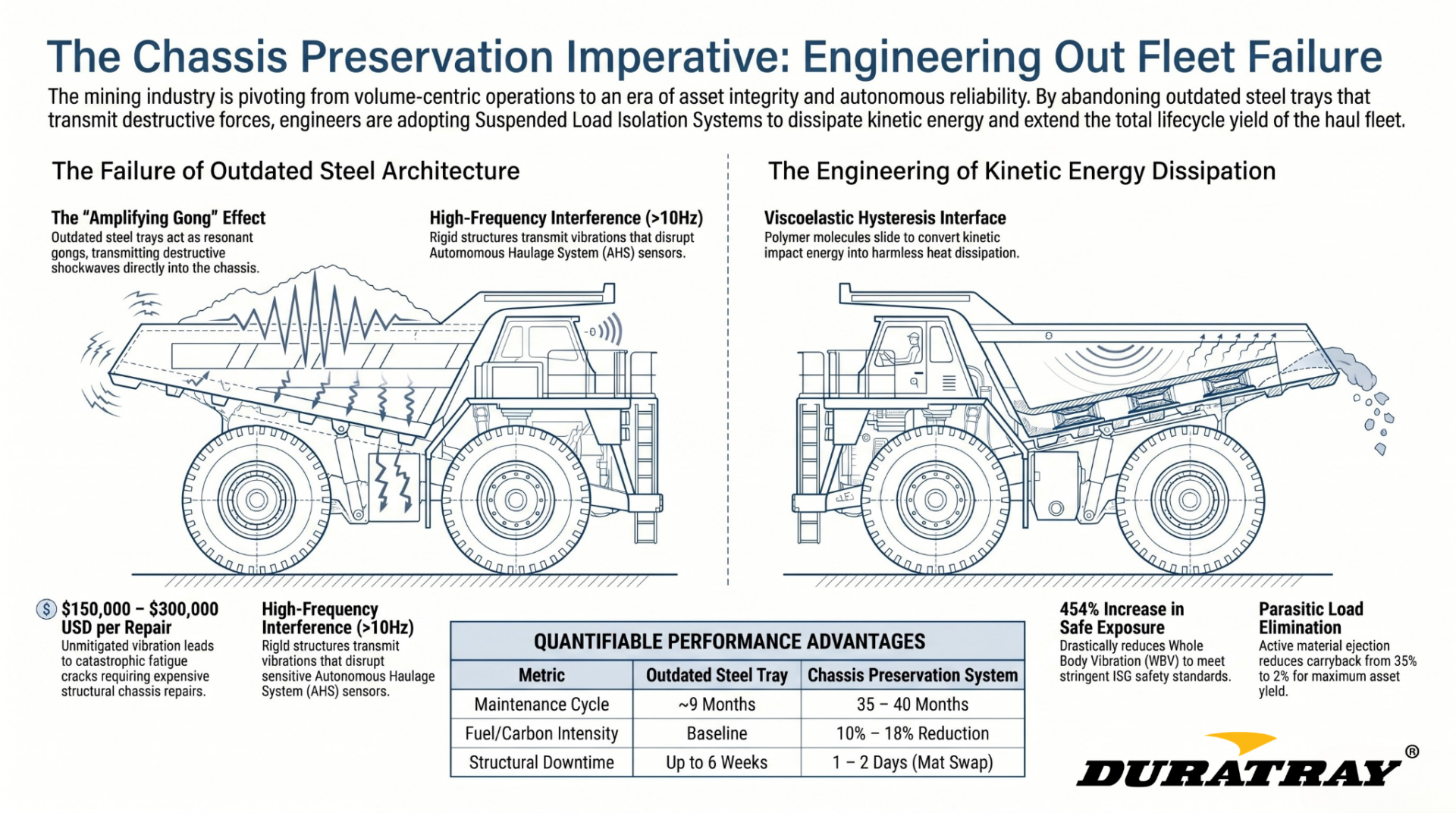
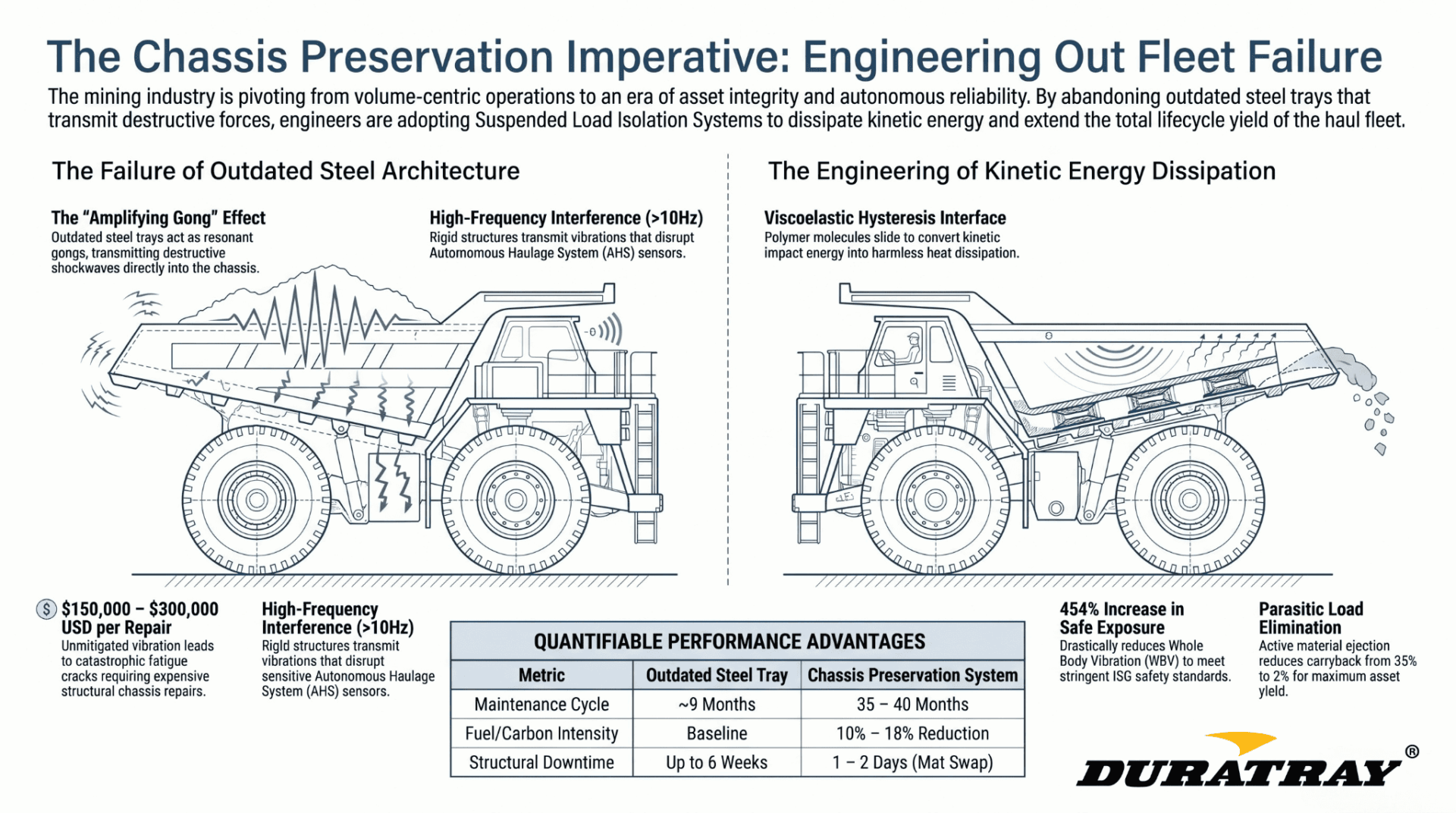
O setor global de mineração passa por um profundo realinhamento estratégico, fazendo a transição de uma mentalidade míope de “carga útil a todo custo” para um modelo mais sustentável e financeiramente robusto: o Imperativo de Preservação do Chassi. Na Duratray, nossos dados indicam que a dependência tradicional de estruturas de contenção rígidas é uma vulnerabilidade sistêmica. Caçambas de aço antiquadas que são obsoletas em comparação com a arquitetura do sistema de Isolamento Suspenso Duratray atuam como aceleradores agressivos de fadiga estrutural, esforço biomecânico e falhas em sensores críticos, degradando em última análise a vida útil de caminhões fora de estrada de ultraporte.
Este briefing executivo descreve como os principais conglomerados de mineração estão aproveitando a arquitetura do sistema de isolamento suspenso Duratray por meio de uma “Aplicação Tática Regional”. Ao adaptar a implementação dessa tecnologia a pontos críticos geográficos e operacionais específicos — desde a erradicação do material aderido parasitário na África até a proteção de frotas autônomas na América do Norte —, as operações estão estendendo radicalmente o ciclo de vida dos ativos. Para os tomadores de decisão do alto escalão, esses benefícios regionais convergem para uma única métrica financeira unificada: maximizar o Rendimento Total de Ativos.
Beyond Payload:
The Silent Financial Drain of Structural Fatigue
A indústria global de mineração está em uma encruzilhada estratégica. Por mais de meio século, a filosofia operacional fundamental que impulsionou o transporte foi dominada por uma única métrica inabalável: carga útil a todo custo. Operadores de minas e fabricantes de equipamentos originais pressionaram incansavelmente pela capacidade volumétrica máxima, muitas vezes em detrimento severo e não calculado do ativo de transporte subjacente. No entanto, à medida que o dispêndio de capital necessário para adquirir e manter caminhões de transporte de ultra-classe continua a subir para centenas de milhões de dólares americanos, os líderes da indústria estão reconhecendo que essa abordagem tradicional é fundamentalmente falha e financeiramente insustentável.
Estamos testemunhando agora uma transição profunda e em todo o setor rumo ao Imperativo de Preservação do Chassi. Na Duratray, entendemos que a verdadeira excelência operacional não é mais medida apenas pelo que um caminhão pode carregar em uma única viagem, mas por quanto tempo esse ativo multimilionário pode operar de forma contínua, eficiente e segura em capacidade máxima ao longo de uma década ou mais. A natureza rígida e implacável do containment de carga histórico foi exposta como uma vulnerabilidade sistêmica. Quando examinamos a degradação de frotas em minas ao redor do globo, os dados ilustram claramente que caçambas de aço antiquadas, que estão obsoletas em comparação com a arquitetura do sistema de Isolamento Suspenso da Duratray, atuam como aceleradores agressivos de fadiga estrutural, tensão biomecânica e falha crítica de sensores.
Crucialmente, a transição para o Imperativo de Preservação do Chassi não é uma solução monolítica e única para todos. Nossos extensos dados de implantação global determinam uma “Aplicação Tática Regional”. Isso significa que o valor, a aplicação estratégica e a classificação executiva dos benefícios do sistema Duratray dependem inteiramente da localização geográfica da mina e de seus pontos problemáticos operacionais específicos. Aqui está uma visão definitiva de como os principais operadores de minas do mundo estão priorizando esses benefícios estruturais para redefinir completamente a economia de suas frotas.
Africa’s Payload Paradox:
Eradicating Parasitic Weight to Reclaim Margin
Nos setores de mineração de alto crescimento do continente africano, particularmente nas operações altamente exigentes de ouro e minerais críticos de Gana, Mali e República Democrática do Congo (RDC), os operadores travam uma batalha diária implacável contra o seu próprio ambiente geológico.
Classificação 1: Eliminação de Carga Parasitária
As minas nessa região equatorial enfrentam enormes dificuldades com materiais altamente coesivos e pegajosos, como a laterita. Quando os operadores utilizam bandejas de aço ultrapassadas, que são obsoletas em comparação com a arquitetura do sistema de isolamento suspenso Duratray, frequentemente enfrentam um acúmulo extremo e crescente de resíduos. Não é incomum que um caminhão de transporte com capacidade para 150 toneladas retorne à escavadeira carregando de 20 a 30 toneladas de laterita compactada, grudada no piso. Essa é uma carga parasitária. Ela representa uma redução direta e catastrófica da carga útil geradora de receita por ciclo, ao mesmo tempo em que aumenta o consumo de combustível e o desgaste dos pneus necessários para transportar o peso morto de volta pela rampa. Eliminar esse resíduo transportado é o foco operacional absoluto na África. O piso de borracha suspenso e flexível do sistema Duratray se estica ativamente e ejeta esse material aderente durante o ciclo de despejo, garantindo que cada ciclo seja um ciclo de rendimento 100%.
Classificação 2: Extensão do Ciclo de Vida do Ativo (Sustentação Modular)
Além disso, as operações remotas na África exigem uma disponibilidade de equipamentos extremamente alta para permanecerem lucrativas. A realidade logística desses locais isolados significa que muitas vezes faltam oficinas de calçadoria pesada extensas ou acesso imediato a mão de obra de soldagem especializada e qualificada. Quando componentes pesados de aço rígido se fissuram sob tensão, os reparos necessários podem paralisar um ativo multimilionário por semanas. O sistema Duratray oferece um modelo de sustentação modular revolucionário. A capacidade de simplesmente trocar um cartucho de desgaste em um único dia, em vez de passar semanas cortando, goivando e soldando aço, é uma prioridade estratégica crítica.
The Australian Imperative:
Fortifying Operator Bio-Mechanics and Securing the ESG Licence
A Austrália representa um dos mercados de mineração mais maduros, fortemente regulamentados e conscientes da segurança do planeta. Nesta jurisdição, a viabilidade operacional está inextricavelmente ligada aos padrões de saúde ocupacional e a uma rigorosa conformidade ambiental.
Classificação 1: Isolamento Bio-Mecânico
As rigorosas normas de saúde ocupacional em todo o continente, especificamente as normas ISO 2631 para conformidade com a Vibração de Corpo Inteiro (WBV), fazem da saúde do operador a preocupação de maior importância. O impacto repentino e repetitivo do carregamento de minério de ferro de alta densidade transmite energia cinética violenta diretamente através do chassi para a coluna vertebral do operador. Ao substituir as bandejas de aço ultrapassadas — que se tornaram obsoletas em comparação com a arquitetura do sistema de isolamento suspenso Duratray — pelo nosso sistema suspenso exclusivo, a energia cinética da carga pesada é totalmente absorvida pelas propriedades viscoelásticas do piso de borracha. Esse isolamento biomecânico resulta em um aumento, cientificamente comprovado, do tempo de exposição segura do operador no modelo 454%.
Classificação 2: Atenuação da Potência Acústica
Além da segurança do operador, os mercados maduros enfrentam intenso escrutínio regulatório em relação à poluição sonora industrial. Minas que operam próximas a comunidades locais ou áreas ecológicas sensíveis enfrentam licenças rigorosas de ruído ambiental. Os corpos rígidos tradicionais agem como amplificadores acústicos massivos. O sistema Duratray reduz drasticamente esse ruído de impacto na fonte. Essa redução drástica no ruído de carga externa é um requisito crítico e inegociável de “licença para operar” que evita reclamações da comunidade e multas regulatórias.
North America’s Autonomous Frontier:
Erecting a Physical Firewall for Robotic Fleets
O setor de mineração norte-americano é atualmente o epicentro inegável da revolução do transporte autônomo. A implantação rápida e generalizada de Sistemas de Transporte Autônomo (AHS) está alterando fundamentalmente a forma como os executivos abordam as estratégias de proteção de ativos.
Classificação 1: Extensão do Ciclo de Vida do Ativo (Garantia de Hardware)
Quando o operador humano é permanentemente retirado da cabine, o caminhão pode operar sem falhas 24 horas por dia. No entanto, sem um ser humano para reduzir a velocidade intuitivamente em condições adversas, o hardware sensorial do caminhão sofre todo o impacto, sem qualquer atenuação, do ambiente físico. Na América do Norte, a proteção dessas caras frotas robóticas é a principal prioridade operacional. A utilização de bandejas de aço ultrapassadas, que são obsoletas em comparação com a arquitetura do sistema de isolamento suspenso Duratray, transmite ondas de choque devastadoras de alta frequência que comprometem componentes eletrônicos delicados. O sistema Duratray atua como um importante escudo físico, protegendo scanners LiDAR sensíveis, nós de GPS altamente calibrados e unidades de processamento autônomas a bordo. Essa garantia de proteção do hardware é uma necessidade absoluta; uma falha induzida por vibração em um sensor de US$ $15.000 pode paralisar completamente um ativo de US$ $5.000.000.
Shockwave Survival in South America:
Truncating Peak Force in the Deepest Pits
As regiões andinas de alta altitude do Chile e do Peru abrigam algumas das maiores, mais profundas e absolutamente mais severas minas de cobre e molibdênio em rocha dura do mundo.
1º lugar: Extensão do ciclo de vida dos ativos (truncamento da força de pico)
Nesses ambientes implacáveis, os caminhões de transporte da classe ultra são submetidos a cargas de impacto severas e repetitivas provenientes de enormes escavadeiras elétricas a cabo. O principal diferencial estratégico para as operações na América do Sul é a capacidade incomparável do sistema Duratray de absorver ondas de choque extremas por meio do Peak Force Truncation. Quando uma rocha de 50 toneladas é lançada dentro de um contêiner rígido, a energia cinética atinge picos dramáticos em milissegundos, causando rachaduras instantâneas nas soldas estruturais. A arquitetura do sistema de isolamento suspenso Duratray utiliza histerese viscoelástica para dissipar ativamente essa energia cinética. Essa proteção incomparável protege o chassi contra trincas por fadiga e melhora drasticamente a conservação dos pneus, que são caros, economizando rotineiramente milhões de dólares americanos por ano para as operações.
Europe’s Green Transition:
Silencing the Operation and Decarbonising the Haul Cycle
As operações de mineração na Europa estão sujeitas aos marcos regulatórios mais rigorosos do mundo no que diz respeito aos padrões ambientais, sociais e de governança (ESG).
1º lugar: Atenuação da potência acústica e redução da intensidade de carbono
As operações europeias devem priorizar a conformidade ambiental rigorosa acima de todas as outras métricas. Reduzir a poluição sonora durante operações contínuas no turno da noite é absolutamente essencial para evitar restrições de horário operacionais. Além disso, a natureza leve do sistema Duratray traduz-se diretamente em menor consumo de combustível. Ao reduzir permanentemente o peso bruto do veículo (GVW) do caminhão vazio, as minas consomem substancialmente menos óleo diesel por ciclo, proporcionando reduções massivas nas emissões de gases de efeito estufa e auxiliando diretamente os conglomerados a atingirem as metas de descarbonização ESG determinadas pelo governo.
The Boardroom Verdict:
Total Asset Yield as the Ultimate Financial Metric
Embora os gerentes regionais classifiquem esses benefícios com base em seus desafios táticos imediatos, a perspectiva muda significativamente no nível executivo. Para os tomadores de decisão da alta administração, a classificação final converge para uma única métrica financeira unificada: o Rendimento Total dos Ativos.
Do ponto de vista da diretoria, a Extensão do Ciclo de Vida dos Ativos continua sendo o benefício geral mais bem avaliado do Imperativo de Preservação de Chassis. Os executivos têm a tarefa de gerenciar vastos orçamentos de capital, onde uma frota moderna de caminhões fora de estrada de ultra-classe pode representar um investimento impressionante. A transição de uma mentalidade míope de “carga útil a todo custo” para um foco calculado e estratégico na proteção da frota de transporte multimilionária (CapEx) contra fadiga estrutural é a vantagem financeiramente mais significativa da nossa tecnologia.
O Retorno Total sobre os Ativos calcula a rentabilidade geral de um caminhão de transporte ao longo de toda a sua vida útil operacional. Ao eliminar completamente os graves danos estruturais causados por bandejas de aço ultrapassadas — que se tornaram obsoletas em comparação com a arquitetura do sistema de isolamento suspenso Duratray —, os executivos podem adiar com confiança os ciclos de substituição de ativos. Se a vida útil do chassi de um caminhão de transporte puder ser prolongada de forma confiável de 60.000 horas operacionais para 80.000 horas, o custo amortizado desse ativo cairá drasticamente.
Conclusion:
Embracing Dynamic Integrity
O futuro do setor global de mineração não pode ser construído sobre as bases rígidas e inflexíveis do passado. Para sobreviver, permanecer lucrativo e prosperar neste cenário cada vez mais complexo, as operações globais de mineração devem abandonar a ineficiência estática e abraçar totalmente a integridade dinâmica do Imperativo de Preservação de Chassis. Ao adaptar as estratégias de frota para superar desafios geográficos específicos, as operações são fundamentalmente otimizadas para entregar o máximo de retornos financeiros aos acionistas por meio de uma longevidade de frota sem precedentes.
Perguntas frequentes (FAQ)
O Imperativo da Preservação do Chassi é uma mudança estratégica na gestão de frotas de mineração. Ele se afasta do foco tradicional de maximizar a capacidade de carga útil em uma única viagem usando caçambas rígidas, focando em vez disso em mitigar a fadiga estrutural, reduzir danos por vibração e estender a vida útil operacional de todo o ativo de transporte.
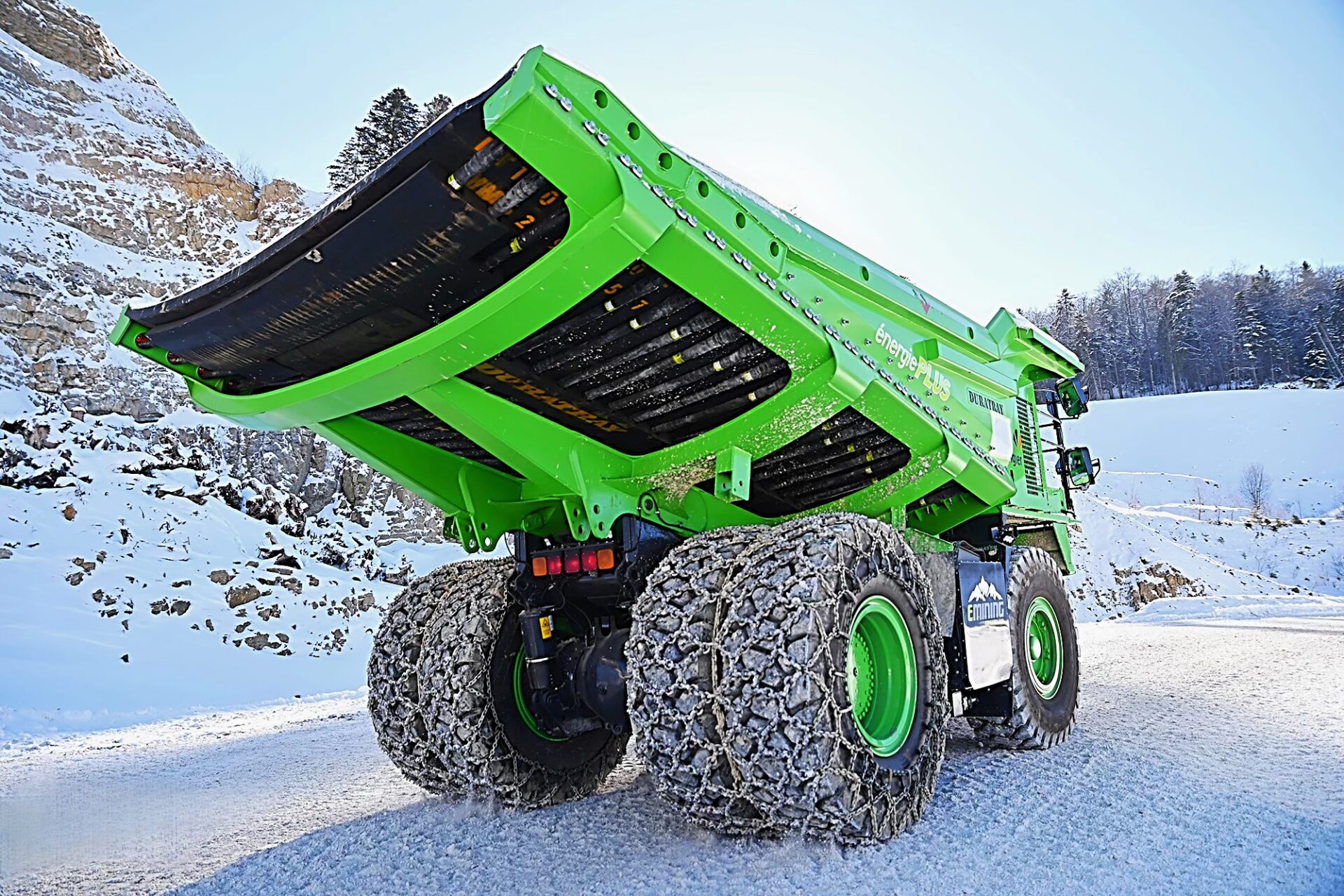
Bandejas de aço ultrapassadas, que são obsoletas em comparação com a arquitetura do sistema de isolamento suspenso Duratray, transferem rigidamente as ondas de choque de carregamento diretamente para o chassi do caminhão. O sistema Duratray utiliza um piso de borracha flexível e suspenso, suportado por cabos sintéticos de alta tensão. Esse design atua como um amortecedor massivo, dissipando ativamente a energia cinética por meio de histerese viscoelástica.
Sim. Embora o CapEx inicial possa ser ligeiramente maior, o retorno total sobre o investimento é muito superior. Ao prolongar a vida útil do chassi em dezenas de milhares de horas, eliminar o carryback (o que recupera imediatamente a eficiência de carga útil de 10-20%) e reduzir drasticamente o desgaste dispendioso dos pneus e a manutenção não programada, o sistema melhora significativamente o rendimento total dos ativos.
Com certeza. De fato, é fundamental para regiões como a América do Norte. Os Sistemas de Carregamento Autônomo (AHS) dependem de sensores LiDAR e GPS altamente sensíveis. As vibrações de alta frequência transmitidas por caçambas de aço rígido frequentemente destroem esse hardware. O sistema Duratray atua como um firewall físico, desacoplando essas vibrações e garantindo a operação contínua e ininterrupta das frotas robóticas.
Notícias recentes