Noticias
Mining Haulage Innovation: 5 Proven Gains for Haul Fleets
Noviembre 24, 2026
Mining haulage innovation is the most overlooked answer to the industry’s growing innovation deficit. Speaking at the International Mining and Resources Conference in Sydney, former Anglo American CEO Mark Cutifani warned that miners who fail to innovate risk being acquired by outsiders, as MINING.COM reported. The Assay echoed the concern, asking whether the sector can keep pace with demand.
Most of that debate focuses on the mine plan and the processing plant. We believe the haul fleet deserves equal attention, because that is where multi-million-dollar assets are quietly damaged on every loading pass.
The Innovation Deficit Starts in the Pit
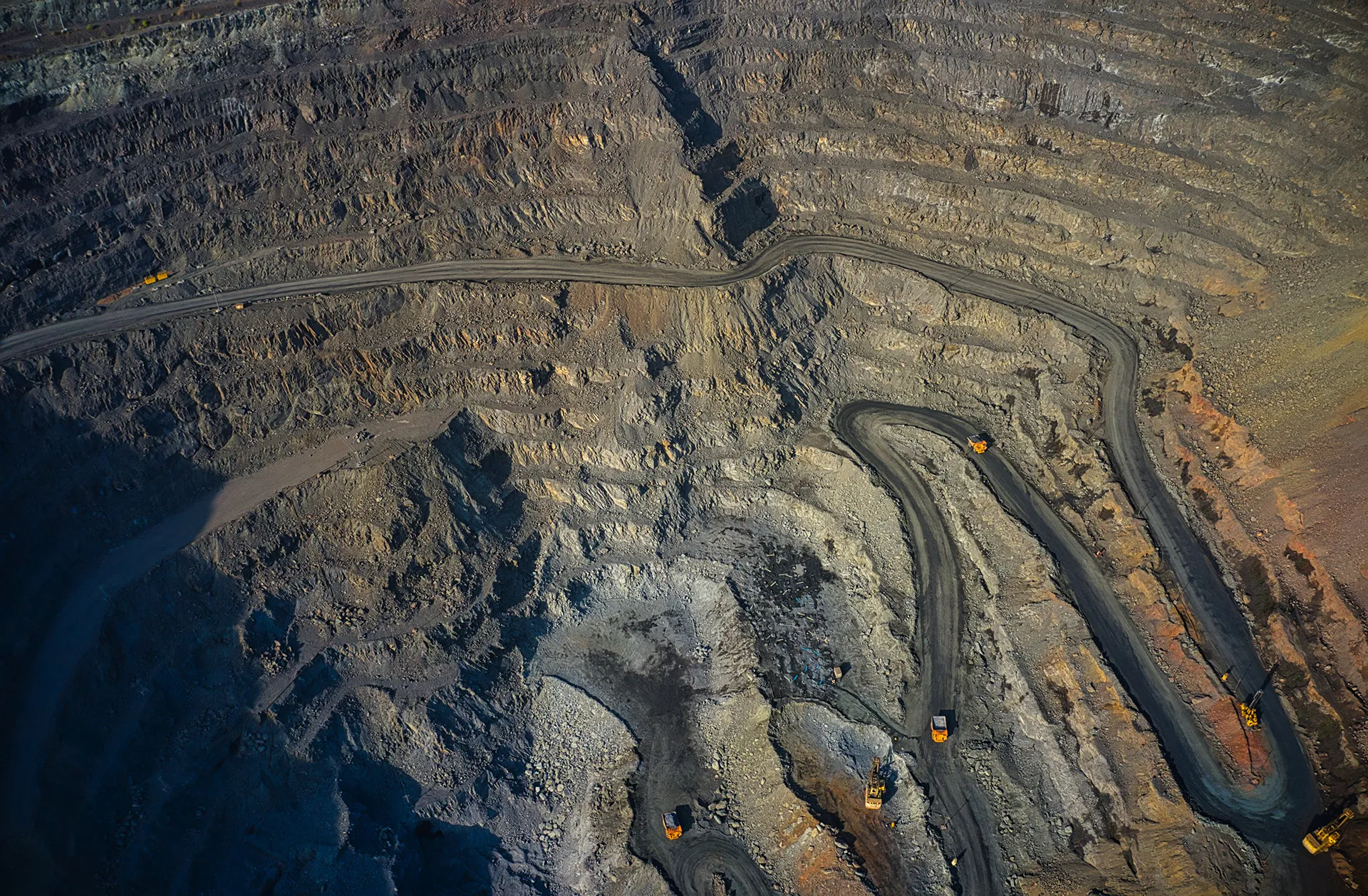
Cutifani’s numbers are stark. Mines are getting about 40 metres deeper each year, and permitting a new project can take up to 20 years. In a decade, operations will sit 400 to 500 metres deeper, and the industry is not developing the technology to cope. The result is an inability to replace the resources already being mined.
Cutifani recalled a 2010 conversation with then-General Electric CEO Jeff Immelt, in which he predicted that within 20 years GE would struggle to source materials because mining was not innovating fast enough. Sixteen years later, he sees little evidence that the gap has closed. He also argued that major producers remain too focused on short-term gains, and that this is one reason outside players may start buying large miners, because the sector is “not doing our job.”
Deeper pits mean longer, harder haul cycles. That raises the stakes for every truck on site, and it makes the weakest link in the haul fleet impossible to ignore.
Why Outdated Steel Trays Deepen the Deficit
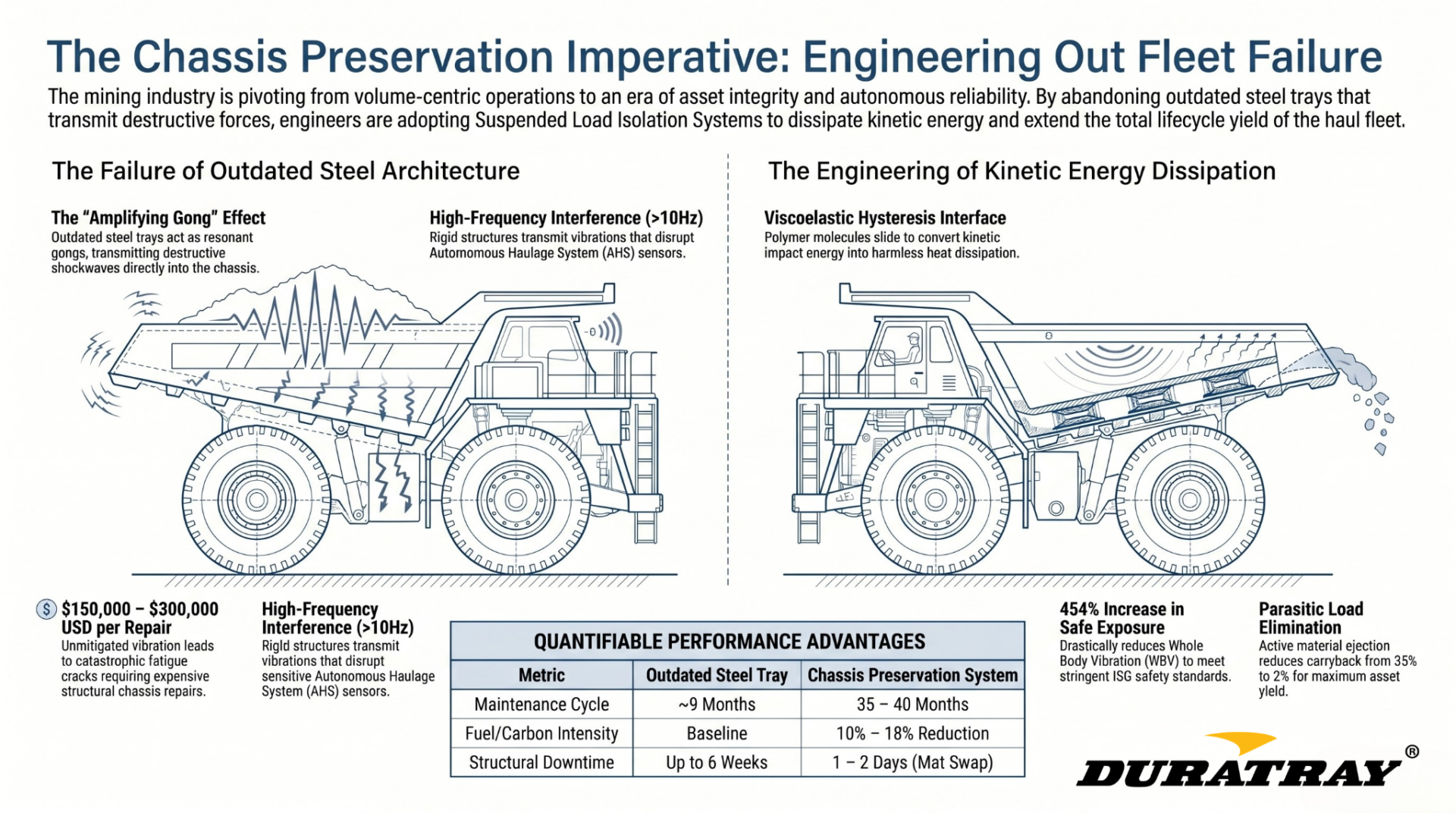
Outdated Steel Trays are rigid by design. When ore drops into them, the steel stores kinetic energy and returns it to the truck frame as Rigid Rebound. The result is high-frequency vibration, weld fatigue and micro-cracking. A single catastrophic chassis repair can cost between $150,000 and $300,000.
Parasitic Load adds a second penalty. Sticky ores cling to rigid steel floors, and in extreme cases up to 35% of capacity is lost. That dead weight is a tax on fuel, tyre life and Scope 1 emissions, paid on every haul cycle.
Neither cost appears on a conventional purchasing spreadsheet, which is exactly why both persist. This is short-term thinking in its purest form.
The Architecture Behind the Technology
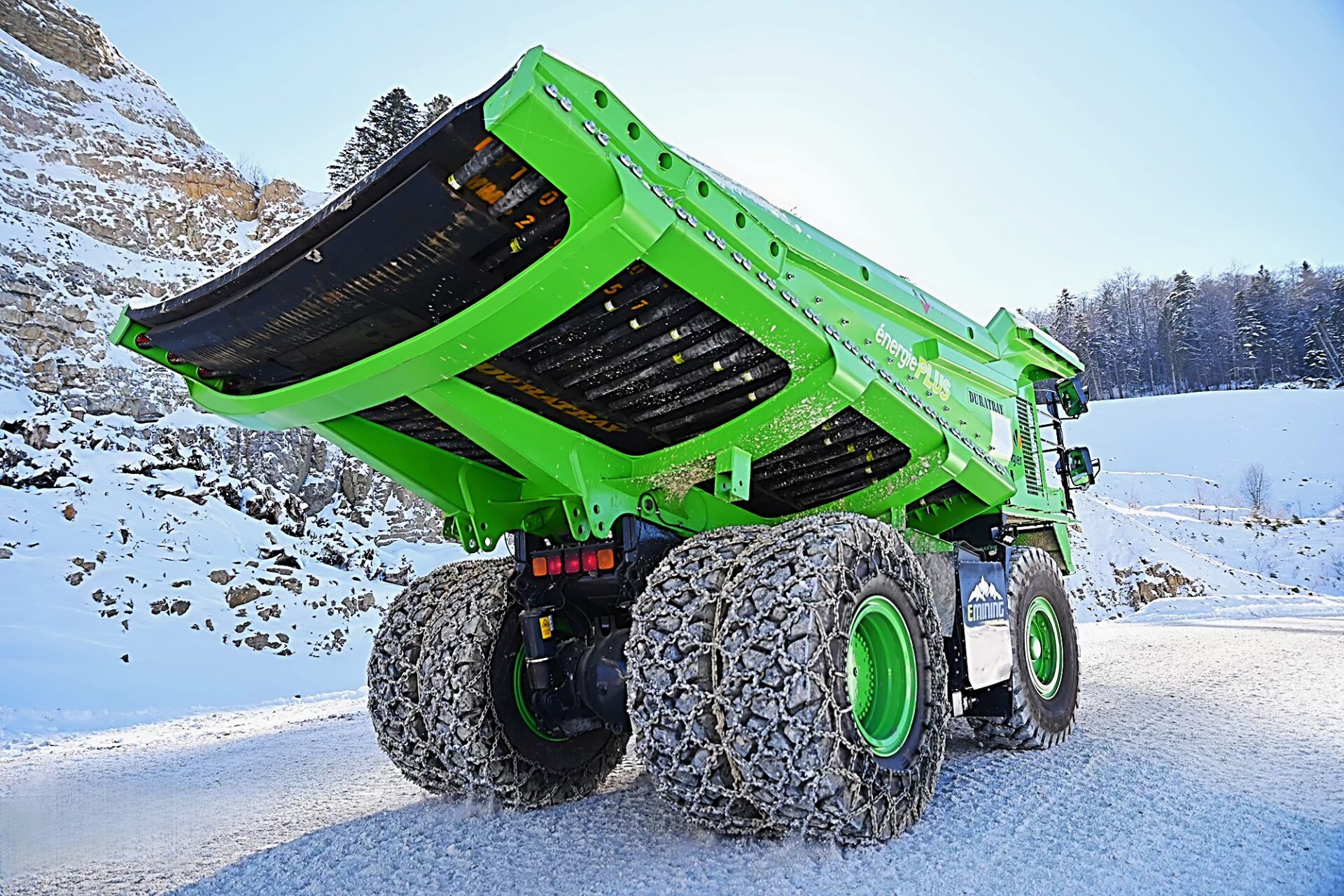
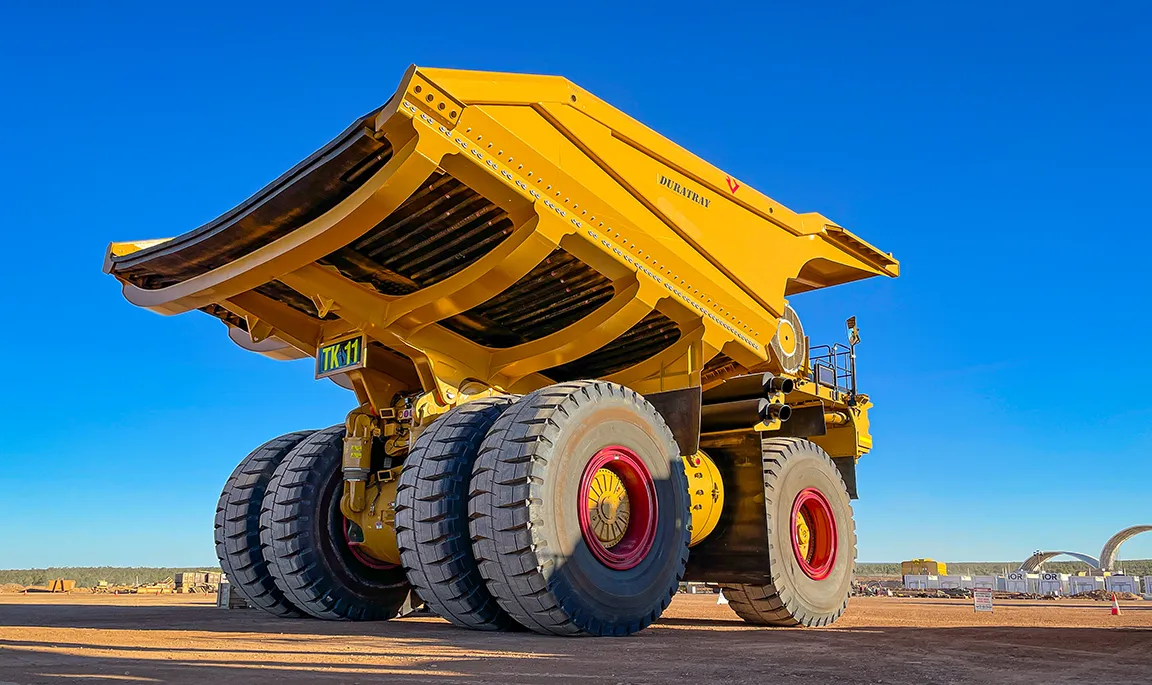
Real innovation starts with architecture, not components. Thinner steel, tweaked geometry and tougher wear packages are refinements of an old idea. The Duratray Sistema de aislamiento de carga suspendida is a different idea altogether: an engineered architecture that decouples the payload from the chassis.
El Carrocería Dump Suspéndida (SDB) is the technology that this architecture makes possible. Every defining feature of the SDB is a function of the system beneath it:
Structural Space Frame:
A high-strength frame that anchors the system and carries the load path.
Dynamic Z-Axis Kinetic Isolation components:
Engineered tension that isolates vertical shock and protects the truck frame.
Viscoelastic Hysteresis Interface:
A floor that deforms under load, with long-chain polymer molecules sliding against each other to convert impact energy into harmless heat. This is Peak Force Truncation.
Active Material Ejection:
Movement in the suspended floor that sheds cohesive material during the dump cycle.
Put simply, the Suspended Load Isolation System is the architecture, and the SDB is the technology that delivers it on the haul road.
Unlocking the Potential You Already Own
Cutifani estimates that fewer than 30% of mining projects worldwide have been designed or are operating at their full potential. His advice to developers is to understand the full resource potential before locking in infrastructure and community plans.
The same discipline applies to haulage. A fleet running Outdated Steel Trays is operating below its potential, losing payload to Parasitic Load and chassis life to Rigid Rebound. Documented SDB results show how much capacity is waiting to be released:
New Vaal Colliery, South Africa:
Payload on Caterpillar 773F trucks rose from 44.65 to 58.39 tonnes, a 30.7% gain. Tare mass fell from 13,483 kg to 12,000 kg, and fuel use dropped from 125 to 102 L/h, an 18% saving.
Isibonelo Colliery, South Africa:
Parasitic Load in extreme sticky clay fell from 35% to 2%, a 94% reduction.
Drayton Mine, Australia:
Whole Body Vibration fell from 0.611 to 0.259 m/s², delivering a 454% increase in safe operator exposure time.
BHP Mt Keith, Australia:
In-cab noise dropped by 5.5 dB(A), with external noise reduced by up to 14 dB.
BHP Ekati, Canada:
An Outdated Steel Tray needed replacement after 8 months. The SDB ran for 40,000 to 50,000 loads, roughly three to four years, in abrasive granite and extreme cold.
Autonomy, ESG and the Investor Lens
Investors are rewarding operational efficiency, environmental performance and capital discipline, and the takeover threat Cutifani describes makes that scrutiny sharper. SDB technology speaks to all three.
Autonomous Haulage Systems depend on LiDAR, GPS and IMU sensors, and high-frequency vibration disrupts them. High-Frequency Vibration Decoupling creates a cleaner sensor noise floor that protects robotic retrofit investments. Eliminating Parasitic Load and cutting tare mass reduces fuel burn and Carbon Intensity. Bio-Mechanical Isolation and Acoustic Power Attenuation support ISO 2631 compliance and the social licence to operate near communities.
Park a Truck: Capital Discipline Under Pressure
With permitting measured in decades and capital under scrutiny, extracting more from existing assets is the fastest route to value. Lifting output by 7 to 8% per unit across a 14-truck fleet allows a mine to reach its production target with 13 trucks. That means you can park a truck, or cancel a budgeted $5 million to $8 million ultra-class purchase outright.
The same logic exposes the false economy of cheap steel. Saving $20,000 on an Outdated Steel Tray can cost $250,000 in chassis fatigue welding and premature truck retirement. Protecting the chassis is the Chassis Preservation Imperative, and it belongs in every capital allocation conversation.
The Next Competitive Advantage in Mining Haulage Innovation
Cutifani’s warning is that the sector must innovate or lose control of its own future. Mining haulage innovation is one of the few levers that can be pulled today, on existing fleets, without a decade of permitting.
It requires a decision to stop buying components and start adopting an architecture. The Suspended Load Isolation System, delivered through the Suspended Dump Body, is that architecture.
Ready to protect your haul fleet? Speak to your Country Executive to request a no-cost on site assessment to optimise your fleet’s operational and commercial challenges.
Frequently Asked Questions About Mining Haulage Innovation
Mining haulage innovation is the redesign of how haul trucks carry and protect a load, rather than only making the equipment bigger. It targets chassis fatigue, Parasitic Load, vibration and noise. Technologies such as the Suspended Dump Body (SDB) extend asset life and lift payload on existing fleets.
The Suspended Load Isolation System is the engineered architecture that decouples the payload from the truck chassis. It combines a Structural Space Frame, Dynamic Z-Axis Kinetic Isolation components and a Viscoelastic Hysteresis Interface. The Suspended Dump Body (SDB) is the technology that delivers this architecture on the haul road.
An Outdated Steel Tray is rigid, so it stores impact energy and returns it to the chassis as Rigid Rebound. The SDB deforms viscoelastically, converting impact energy into harmless heat through Viscoelastic Hysteresis. This is called Peak Force Truncation. Less shock reaches the truck frame as a result.
At Anglo American’s New Vaal Colliery, payload on Caterpillar 773F trucks rose from 44.65 to 58.39 tonnes, a 30.7% gain. The increase came from eliminating Parasitic Load and cutting tare mass from 13,483 kg to 12,000 kg. Fuel use also fell from 125 to 102 L/h.
Yes. Rigid Rebound drives weld fatigue and micro-cracking, and a single catastrophic chassis repair can cost between $150,000 and $300,000. At BHP Ekati, an Outdated Steel Tray needed replacement after 8 months, while the SDB ran for 40,000 to 50,000 loads, roughly three to four years.
Yes. LiDAR, GPS and IMU sensors are disrupted by high-frequency vibration from loading. The SDB provides High-Frequency Vibration Decoupling, which creates a cleaner sensor noise floor. This protects robotic retrofit investments and supports Autonomous Haulage Systems on brownfield fleets.
“Park a truck” means reaching your production target with fewer trucks. If an SDB lifts output by 7 to 8% per unit, a 14-truck fleet can meet its target with 13. The mine can park one truck, or cancel a budgeted $5 million to $8 million ultra-class purchase.
Noticias recientes