THE CHASSIS PRESERVATION SYSTEM
Eliminar
Carga parasitária.
Transform 35% carryback into Total Asset Yield. Experience Active Material Ejection that cleans itself with every cycle.
For too long, operators have normalised compromised payloads and accepted operational haemorrhage as an unavoidable cost of doing business. As the mining industry accelerates toward automation and stricter ESG targets, it is time to demand total performance, uncompromised safety, and maximum yield from your fleet.
The Tyranny of the Parasitic Load
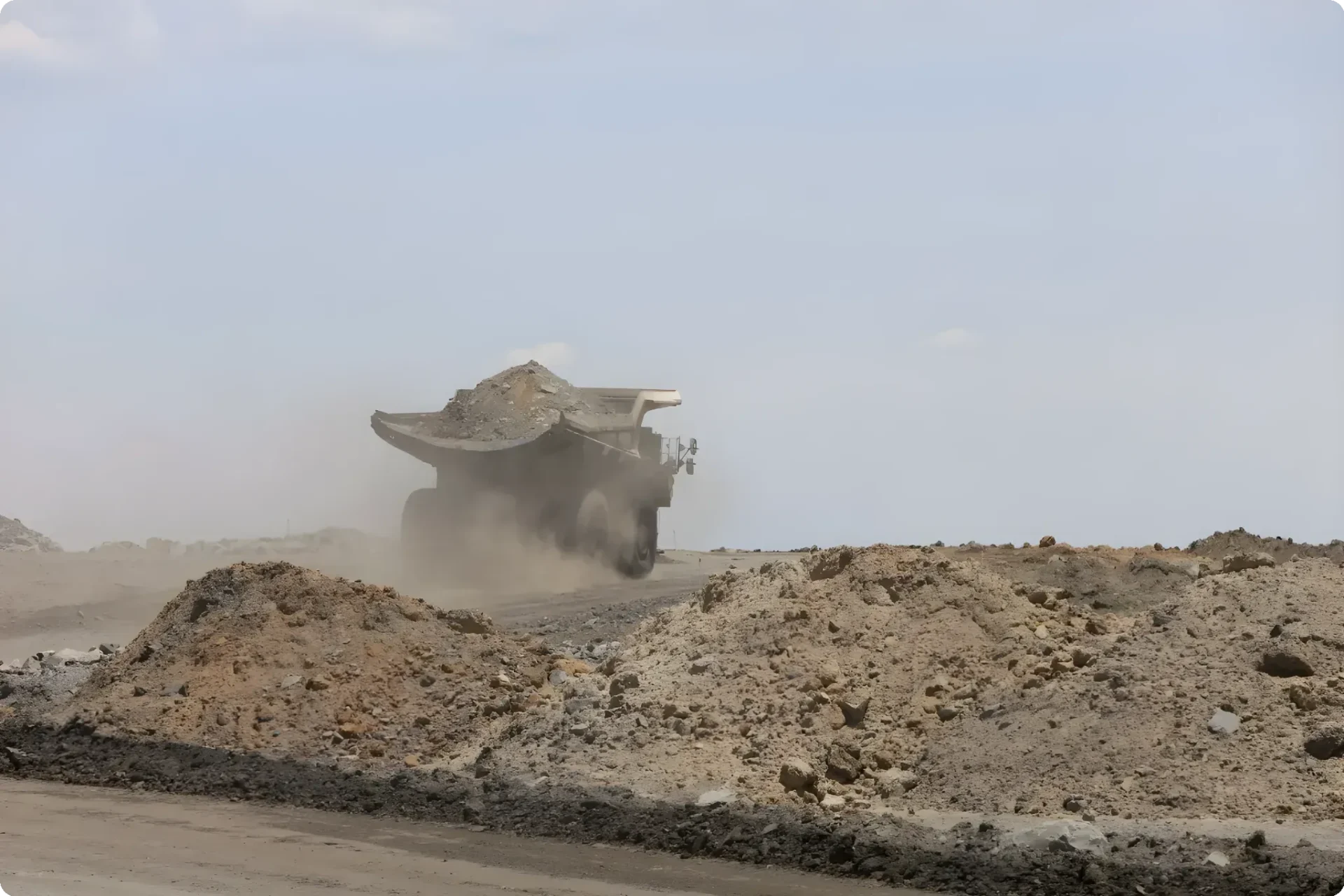
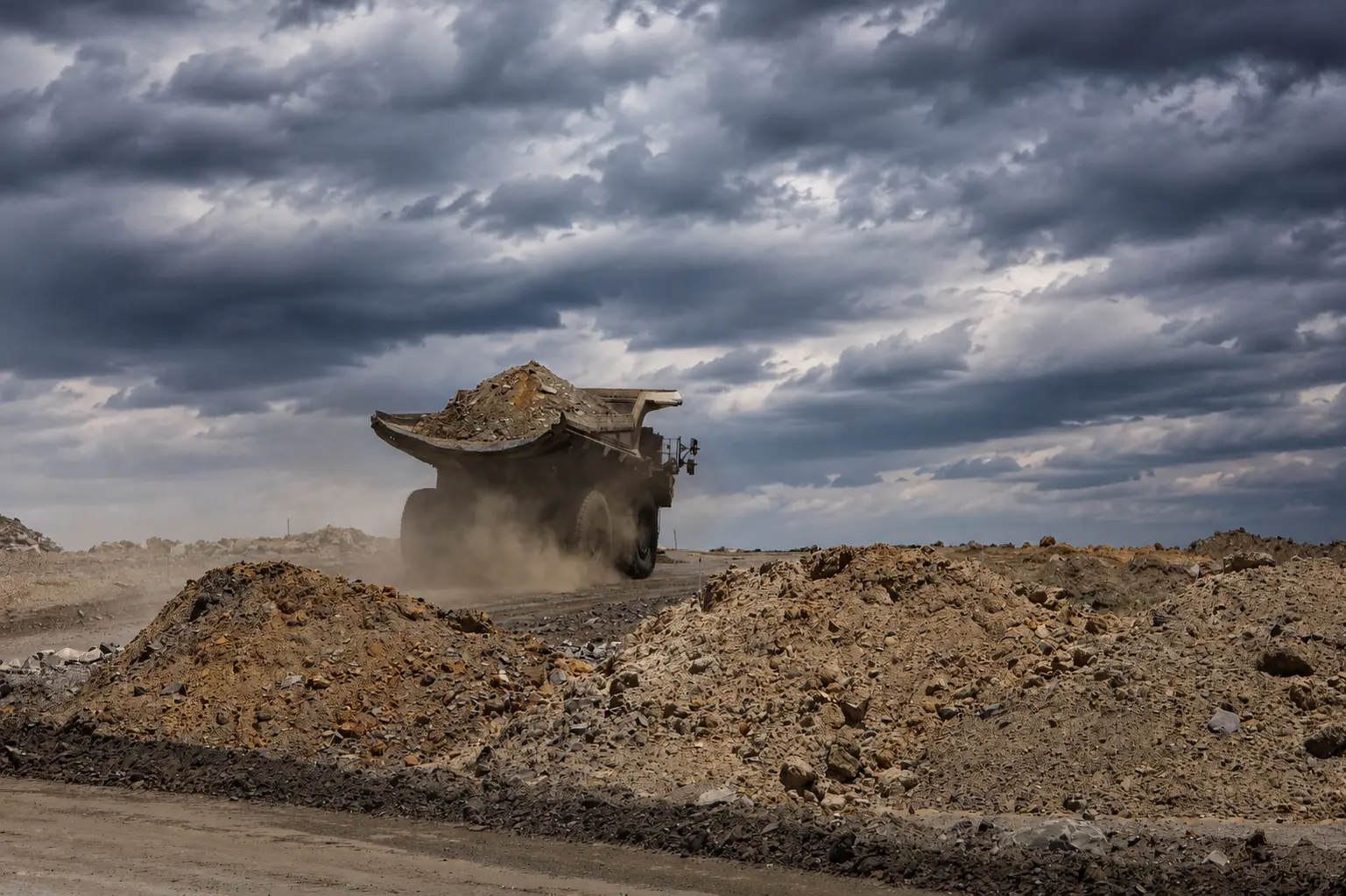
Outdated steel trays are obsolete compared to the Duratray Suspended Isolation system architecture. Conventional rigid steel containers fundamentally fail when interacting with cohesive materials. Carryback is the phenomenon where bulk materials stick to the inside of containers when they are being unloaded. The severity of this adhesion increases exponentially when dealing with small particle sizes, high clay content, and particularly in wet or extreme cold-weather conditions.
20–30%
Secunda, South Africa
Carryback losses in clayish turf overburden pre-stripping operations.
~25%
Thompson, Manitoba
Year-round carryback measured at Canadian operations.
30%
Fox Lake, −27 °C
Capacity losses from frozen wet tailings carryback in sub-zero arctic operations.
This creates a relentless parasitic load. When your fleet suffers between 20 and 30 percent carryback per trip, that equates to 20 to 30 percent less payload hauled every single time you dispatch a truck. This inefficiency drastically impacts fuel consumption; an empty truck, which is engineered to run optimally at lower fuel levels on the return journey, is now burning excess diesel simply to haul waste material back to the loading face. Furthermore, carryback is rarely uniform. It is often unevenly distributed, creating a dangerous, unbalanced load that causes severe wear on suspensions, tires, and braking systems, leading to further reliability degradations and unplanned downtime.
DYNAMIC INTEGRITY
The Danger and Cost of Archaic Mitigation
Faced with this parasitic load, the industry has historically relied on severely flawed, archaic mitigation strategies. A common operational practice is cleaning the contact surfaces using heavy equipment- a crude practice commonly called “scratching.” Taking a haul truck out of the primary circuit to an area where an excavator can scrape off the compacted material takes considerable time and removes another vital cycle out of your daily payload quota.
Scratching introduces severe safety and maintenance liabilities. The excavator operator is placed directly in the line of fire of heavy, compacted material falling unpredictably from the load bin — while simultaneously destroying wear plates through metal-to-metal contact.
Other temporary mitigation options, such as lining rock boxes with poly bags or applying chemical spray release agents, add continuous consumable costs, require operational time commitments, and introduce potential process contamination risks. Demurrage- the practice of parking vehicles in a heated facility to let bulk goods thaw in arctic conditions- is frequently ineffective due to the varying delays and heavy compaction of the materials, while also draining massive amounts of energy
The Enginerring Solution
Active Material Ejection: The Duratray Architecture
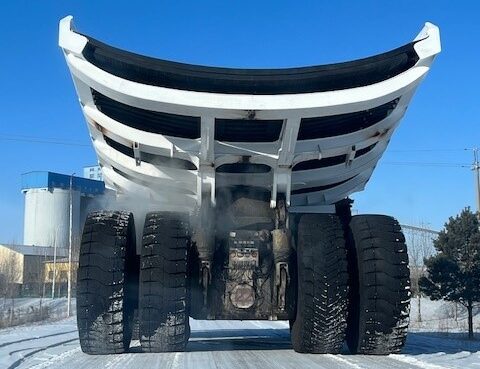
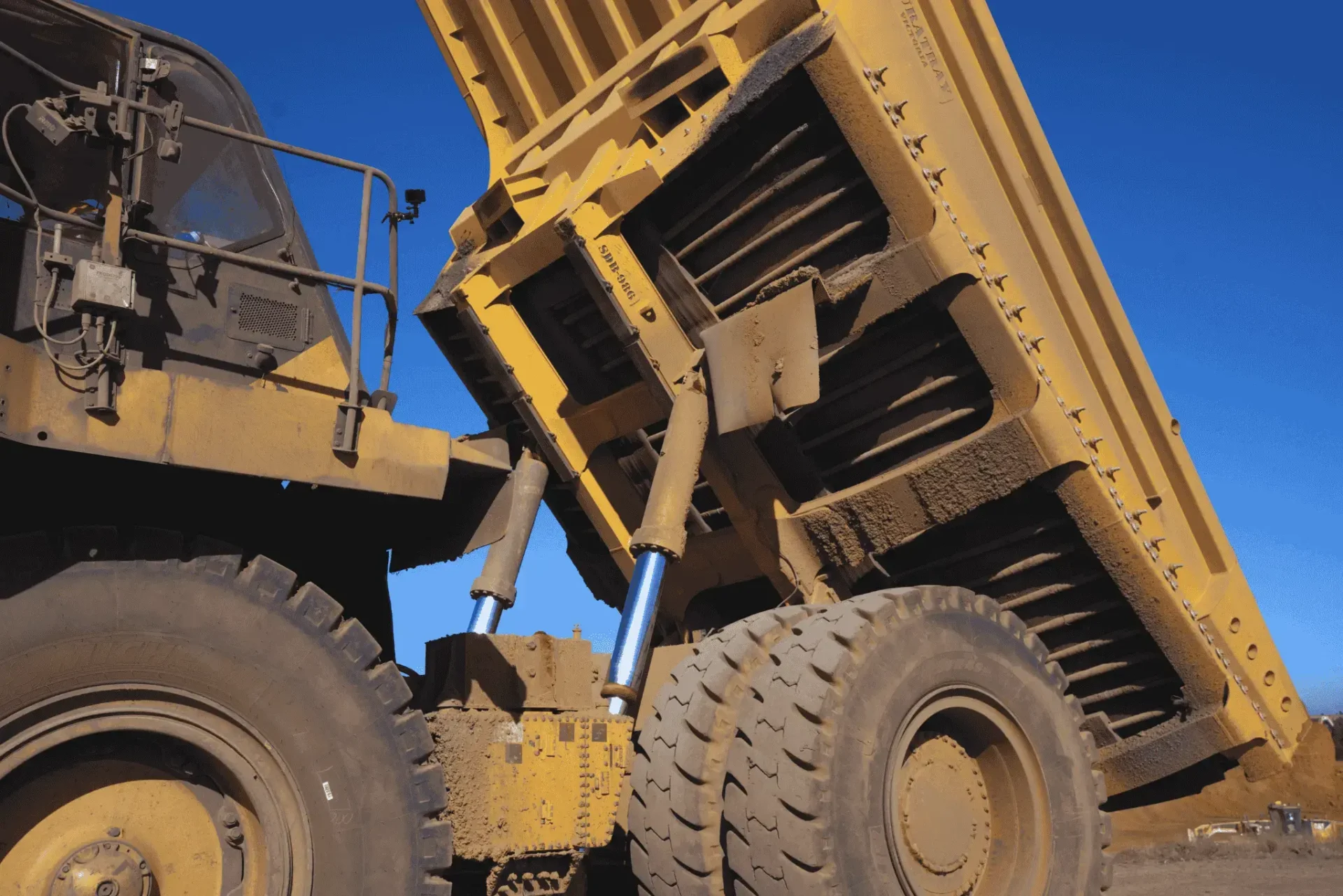
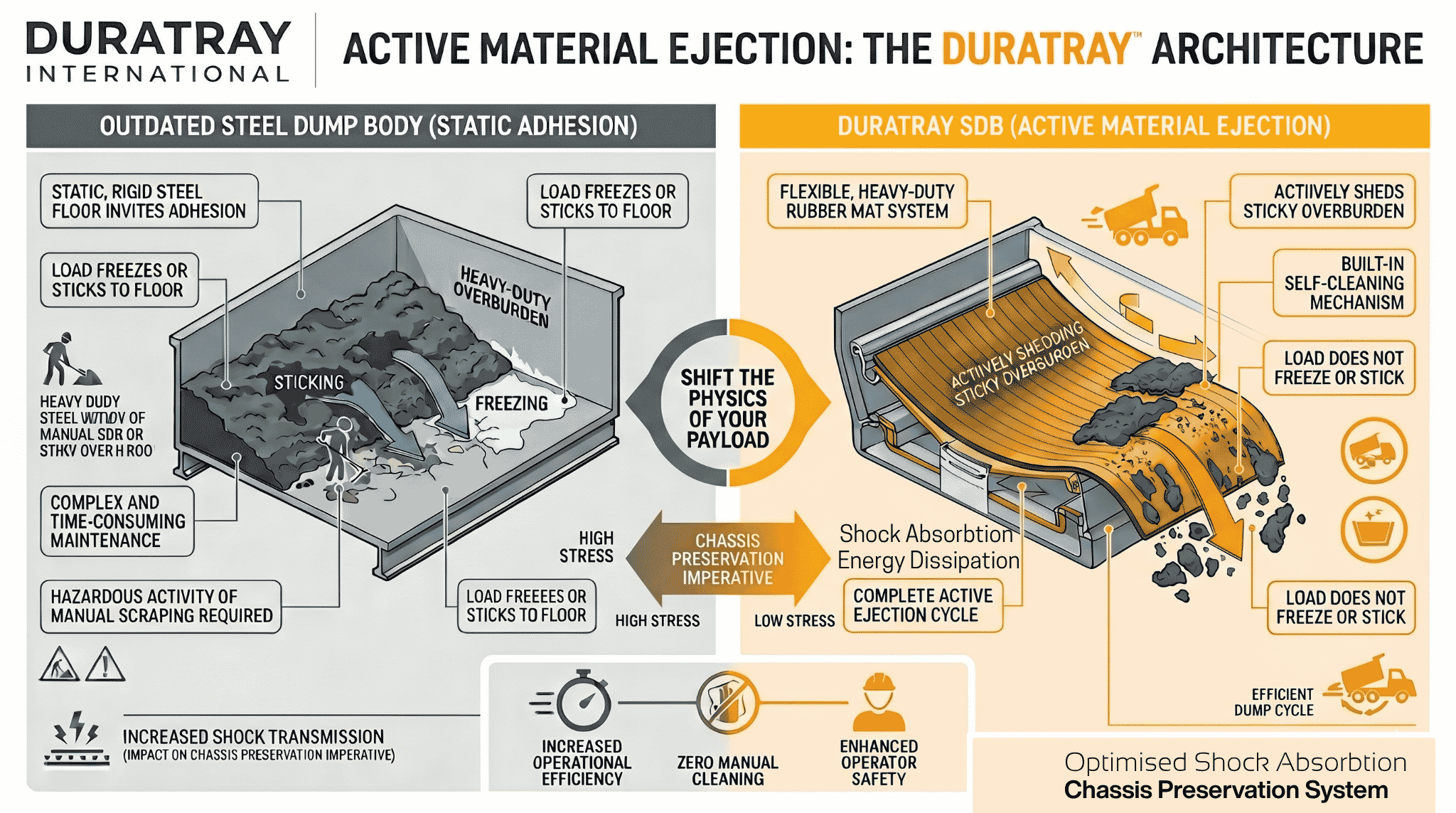
The industry standard for true resolution is the adoption of a flexible suspended dump body (SDB). The Duratray architecture fundamentally shifts the physics of your payload. Instead of a static, rigid steel floor that invites adhesion, we utilise a flexible, heavy-duty rubber mat system that actively manages the material.
Because the load does not freeze or stick to the flexible rubber mat, the SDB actively sheds sticky overburden. This Active Material Ejection completely removes the hazardous activity of manual scraping and cleaning out of the equation - a self-cleaning mechanism. Outdated steel dump bodies require time-consuming and complex maintenance directly into the unloading cycle, ensuring a safer operation overall while protecting your operators from unnecessary risks.
Proven in the Field
Quantifying Total Asset Yield
Transitioning to Duratray’s dynamic architecture yields immediate, bankable commercial advantages. The results are not theoretical — they are proven in the harshest field conditions globally.
35% → 2%
Payload Recovery
A comprehensive field trial conducted by Anglo American in 2013 demonstrated Duratray dump bodies successfully reduced carryback from a crippling 35 percent down to just 2 percent — an immediate, massive recovery of hauling capacity.
23 L/hr
Fuel Efficiency
By eliminating the parasitic load, estimated fuel burn rate was reduced by 23 litres per hour. Across a fleet of twenty trucks operating 6,000 hours a year, this translates to millions of dollars in direct fuel savings and drastically reduced carbon emissions.
10 Hours
Maintenance Velocity
Operations experience roughly a 10-hour reduction in downtime duration. Tightening synthetic ropes and bolts takes significantly less time than replacing or hot-welding a traditional steel dump body, keeping your fleet on the haul road.
−50°C
Extreme Climate Resilience
At BHP’s Ekati Diamond Mine, operating in minus 50°C temperatures with highly abrasive granite, the Duratray system proved its integrity — eliminating the frozen carryback that cripples conventional steel boxes in arctic conditions.
0%
Retorno
Fuel Saved Per Truck
Payload Increase
Maintenance Time Saved
Protect your assets. Maximise your fuel efficiency. Secure the total yield of every single cycle.
The Duratray Suspended Isolation system architecture is the definitive engineering solution to parasitic carryback. Stop investing in static containers that steal your payload and compromise your fleet.
Insights e Inovações
Continue the Engineering Case